Crown and Bridge Lab in San Jose, CA: A Dentist's Guide


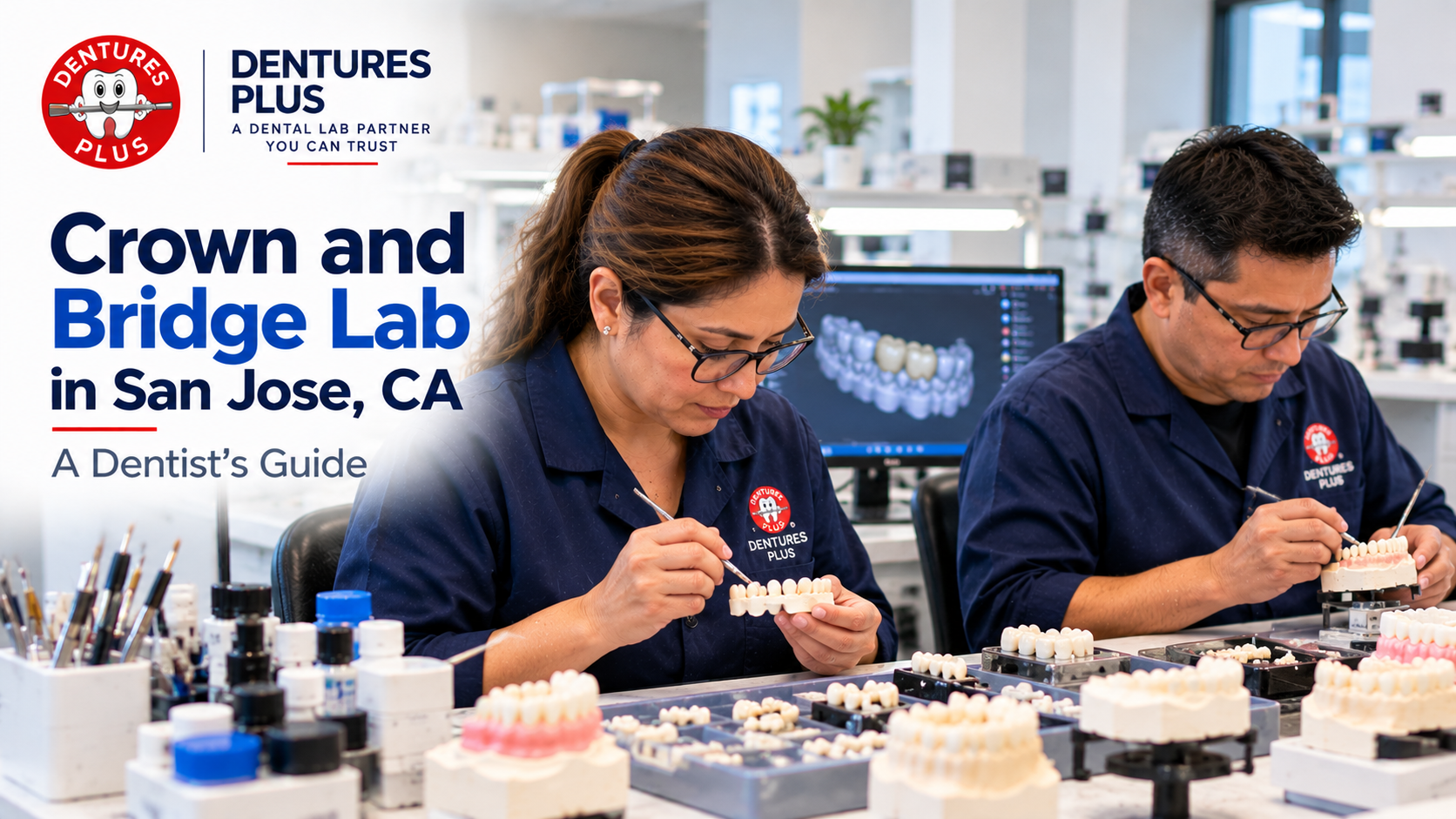
Crowns and bridges are common restorative solutions in dentistry, and the dental laboratory plays an important role in their fabrication. From reviewing case information to designing, finishing, and checking restorations, laboratory processes need to align with the dentist's prescription and the requirements of each case.
For dental practices searching for a crown and bridge lab in San Jose, CA, choosing the right laboratory partner involves more than comparing prices. Dentists should consider communication, digital capabilities, technical experience, quality-control procedures, and how well the lab fits into their practice workflow.
This guide explains what dental professionals should look for when choosing a crown and bridge laboratory.
What Does a Crown and Bridge Dental Lab Do?
A crown and bridge dental laboratory works with dentists to fabricate restorations based on the prescription, clinical information, and case materials provided by the dental practice.
Depending on the case, laboratory services may include:
• Single-unit dental crowns
• Multi-unit bridges
• Tooth-colored restorative solutions
• Digital crown and bridge design
• Restoration finishing and polishing
• Case-specific laboratory support
The dentist determines the clinical treatment plan and prepares the case, while the laboratory focuses on fabrication according to the submitted instructions.
Clear coordination between the dental practice and laboratory helps ensure that the team has the information needed to proceed with the case.
1. Accurate Case Information Is Essential
A well-organized case submission gives the laboratory a clearer understanding of the dentist's requirements.
Depending on the restoration and workflow, case information may include:
• A completed laboratory prescription
• Intraoral scans or traditional impressions
• Bite registration and occlusal information
• Shade selection
• Preparation details
• Photographs when relevant
• Material preferences
• Special design instructions
Missing or unclear details may require follow-up communication before the laboratory can proceed.
For this reason, dentists should establish a consistent case submission process and confirm that their laboratory understands the information provided with each case.
2. Digital Scans and Traditional Impressions
Dental practices may submit crown and bridge cases through digital or traditional workflows.
Digital workflows
Digital submissions may include intraoral scans and compatible files, such as STL files. Depending on the laboratory's capabilities, these files can support digital model preparation, CAD-based restoration design, and other computer-assisted processes.
Before choosing a lab, dentists should confirm which file formats and scanning systems the laboratory accepts.
Traditional workflows
Traditional impressions and physical models remain part of many dental laboratory workflows. The laboratory needs to understand the submitted materials and have an appropriate process for working with them.
A suitable laboratory partner should be compatible with the workflow used by the practice rather than requiring every case to follow the same process.
3. Shade Selection and Esthetic Requirements
For tooth-colored crowns and bridges, shade information can be an important part of case communication.
Dentists may provide a shade selection, photographs, or additional instructions when the case requires closer attention to appearance. The specific information needed depends on the restoration, materials, and clinical situation.
The laboratory should review the available information and communicate with the dental practice if important details are unclear.
Clear instructions help the laboratory understand the intended result, although the final clinical outcome also depends on factors beyond laboratory fabrication alone.
4. Fit, Function, and Restoration Design
Crown and bridge restorations must be considered in the context of the individual case.
Relevant laboratory considerations may include:
• Restoration design
• Marginal and internal fit requirements
• Occlusal relationships
• Contact points
• Material requirements
• Surface finishing
• Esthetic characteristics
These considerations vary by case and restoration type. The laboratory's role is to fabricate the restoration in accordance with the dentist's prescription and the information supplied.
A structured review process can help identify potential issues before the restoration is returned to the dental practice.
5. Communication Between Dentists and the Laboratory
Even a well-prepared case may require clarification.
For example, the laboratory may need additional information about shade, design, materials, occlusion, or a digital file. A clear communication process helps the dental team and laboratory address these questions before moving forward.
When evaluating a crown and bridge dental lab, dentists should ask:
• How are case questions communicated?
• Who should the practice contact about a specific case?
• What happens when submitted information is incomplete?
• How are special instructions recorded?
• How does the laboratory handle follow-up questions?
Reliable communication is an important part of a productive laboratory relationship.
6. Quality Control Before Case Delivery
Quality control helps the laboratory review a restoration before it leaves the facility.
Depending on the case, this may include checking relevant design details, finishing, surface condition, appearance, and other requirements specified for the restoration.
Dentists should ask potential laboratory partners about their review procedures and how they communicate when an issue is identified.
A consistent quality-control process supports better case coordination, although no laboratory process can guarantee a perfect clinical result in every case.
7. How to Choose a Crown and Bridge Lab in San Jose
For dental practices in San Jose and surrounding communities, selecting a laboratory should involve an evaluation of both technical capabilities and day-to-day service.
Consider the following factors:
• Service range: Does the laboratory handle the crown and bridge cases your practice regularly submits?
• Digital compatibility: Can it accept your practice's scans and supported file formats?
• Case communication: Is there a clear process for questions and special instructions?
• Quality control: Does the laboratory have a defined process for reviewing completed cases?
• Workflow compatibility: Can its processes work with your practice's submission and scheduling requirements?
• Professional support: Is the laboratory willing to discuss case-specific requirements with your dental team?
Local proximity can be convenient, but location should be evaluated alongside the laboratory's experience, services, communication, and workflow compatibility.
8. Crown and Bridge Laboratory Services at Dentures Plus
Dentures Plus is a dental laboratory in San Jose, California, serving dentists and dental clinics with restorative laboratory services.
Its service range includes crowns and bridges, dentures and partials, implant restorations, veneers, dental appliances, and digital dental workflows.
For dental professionals, choosing a laboratory partner means finding a team that understands case requirements, communicates when clarification is needed, and works within the practice's preferred submission process.
Dentures Plus supports dental practices through its laboratory services and digital workflows, helping dentists coordinate restorative cases with a professional laboratory partner.
Dental practices considering a new laboratory relationship can review the services offered at Dentures Plus and determine whether they align with their clinical and workflow needs.
Questions Dentists Should Ask a Crown and Bridge Lab
Before choosing a crown and bridge laboratory, dentists may want to ask:
• What types of crowns and bridges do you fabricate?
• Which digital scan formats do you accept?
• Do you support traditional impressions and physical models?
• What case information should accompany each prescription?
• How do you handle unclear or incomplete instructions?
• What quality-control steps do you follow?
• How are shade and esthetic requirements communicated?
• How can our team contact you about a case?
• What is your process for handling complex restorations?
• Can your workflow accommodate our practice's needs?
These questions can help dentists compare laboratories based on practical requirements rather than price alone.
Final Thoughts
Choosing a crown and bridge lab in San Jose, CA, involves evaluating the laboratory's technical capabilities, communication process, digital compatibility, and approach to quality control.
A strong laboratory relationship begins with clear case information and continues through design, fabrication, review, and communication with the dental practice.
For dentists, taking the time to evaluate these factors can help identify a laboratory partner whose services and workflow are appropriate for their restorative cases.
Frequently Asked Questions
What should dentists look for in a crown and bridge lab in San Jose?
Dentists should evaluate the laboratory's experience, range of services, digital capabilities, case communication, quality-control procedures, and compatibility with their practice workflow.
Do crown and bridge labs accept digital impressions?
Many modern laboratories accept digital case submissions. Dentists should confirm which scanners, file formats, and submission methods their chosen laboratory supports.
What information should accompany a crown and bridge case?
Depending on the case, the laboratory may need a prescription, scans or impressions, bite information, shade selection, photographs, material preferences, and special instructions.
Why is communication important when working with a dental laboratory?
Clear communication helps the laboratory understand the dentist's requirements and request clarification when necessary. This supports a more organized case workflow.
Does Dentures Plus provide crown and bridge laboratory services?
Yes. Dentures Plus lists crowns and bridges among its dental laboratory services for dentists and dental clinics.