From Case Submission to Final Restoration: Understanding the Dental Lab Workflow


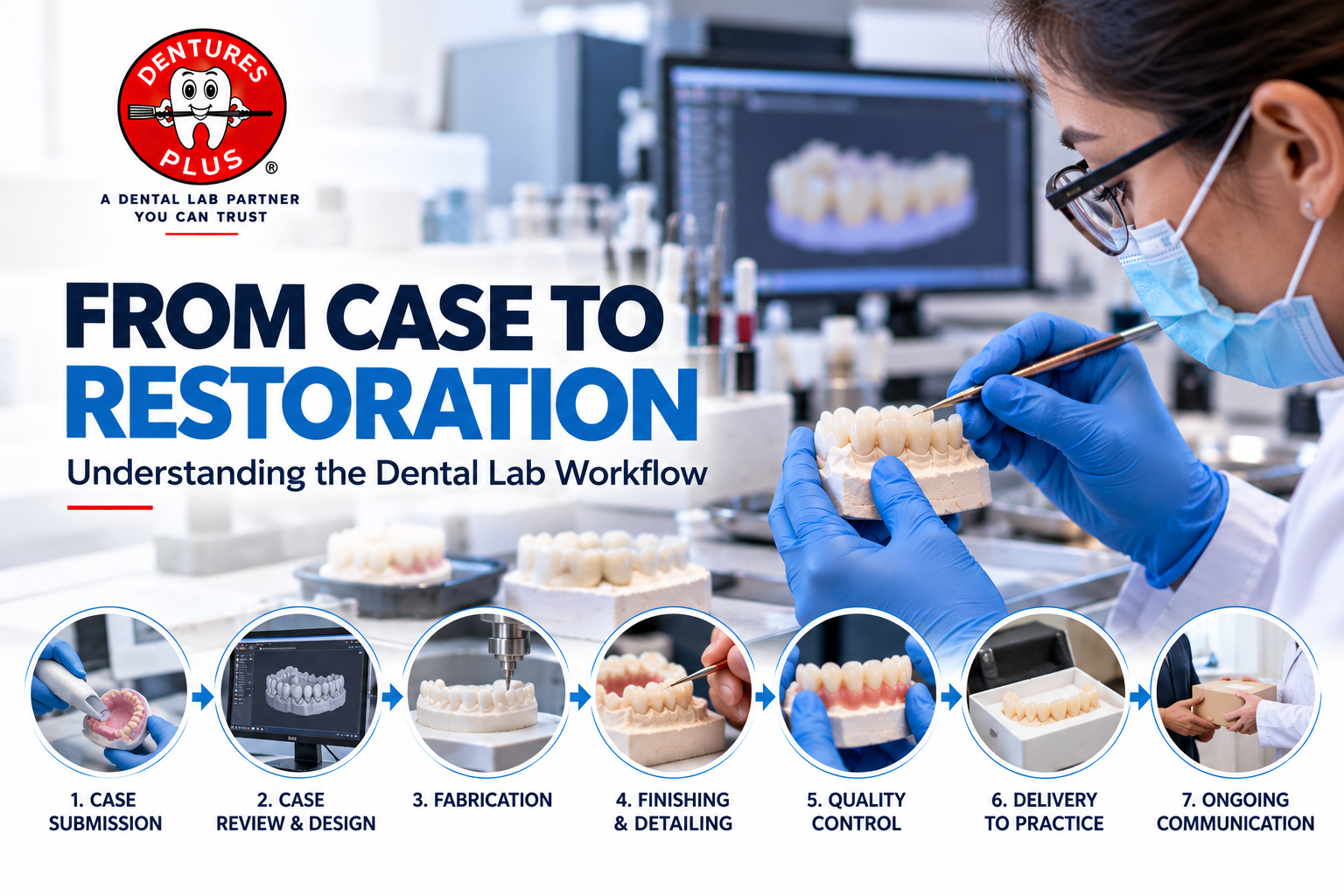
A dental restoration does not begin when a technician starts working on it. The laboratory process starts much earlier—with the case information, prescription, digital files or impressions provided by the dental practice.
Understanding the basic dental laboratory workflow can help dentists communicate more effectively with their laboratory partners and create a smoother process from case submission to final restoration.
1. Case Submission
Every laboratory case begins with information from the dental practice.
Depending on the restoration, the case may include:
• Digital scans or traditional impressions
• Prescription details
• Shade information
• Bite records
• Patient photographs when required
• Restoration specifications
• Special instructions
Complete and accurate information gives the laboratory a clear understanding of the case requirements.
2. Case Review
Once the case reaches the laboratory, the team reviews the available information before beginning fabrication.
The laboratory may check whether the necessary files, impressions, prescriptions, and other details are available.
If clarification is needed, communication with the dental practice at this stage can help avoid unnecessary delays later.
3. Model and Digital Preparation
The next step depends on the type of case and workflow being used.
Traditional cases may involve physical models and impressions, while digital cases can involve intraoral scans and computer-based design workflows.
Modern dental laboratories may combine digital technology with traditional laboratory techniques depending on the requirements of each case.
4. Restoration Design
For applicable cases, the restoration is designed according to the dentist's prescription and case requirements.
Design considerations may include:
• Tooth anatomy
• Contours
• Contacts
• Occlusion
• Esthetics
• Restoration dimensions
The objective is to create a restoration that follows the requirements provided by the dental practice.
5. Fabrication
Once the design or laboratory setup is ready, the restoration moves into fabrication.
Depending on the case, this may involve digital manufacturing, 3D printing, milling, traditional laboratory techniques, or a combination of different processes.
The exact workflow depends on the type of restoration and materials being used.
6. Finishing and Detailing
Fabrication is only one part of the laboratory process.
Restorations may require additional finishing, polishing, contouring, characterization, or other laboratory procedures before they are ready for delivery.
Attention to these details can have an important impact on the final appearance and presentation of the restoration.
7. Quality Control
Before a completed case leaves the laboratory, appropriate quality checks should be performed.
Depending on the restoration, the laboratory may review:
• Case identification
• Restoration design
• Contacts
• Occlusion
• Fit-related requirements
• Shade and esthetics
• Finishing and polishing
• Dentist's prescription
A consistent quality-control process helps the laboratory identify potential issues before the case reaches the dental practice.
8. Delivery to the Dental Practice
After the laboratory process is complete, the restoration is prepared for delivery to the dental practice.
Clear case identification and proper communication remain important at this stage.
The dentist can then evaluate the restoration clinically and determine whether any further adjustment or laboratory communication is required.
9. Communication After Delivery
The laboratory relationship does not necessarily end when a case is delivered.
If an adjustment, clarification, or additional laboratory work is needed, clear communication between the dental practice and laboratory can help resolve the issue efficiently.
Over time, this communication also helps the laboratory better understand the dentist's preferences and workflow.
Why Understanding the Lab Workflow Matters
For dentists, understanding how a case moves through a laboratory can make communication more effective.
Providing complete case information, clear instructions, accurate digital files or impressions, and appropriate shade and esthetic details can help the laboratory team work more efficiently.
At the same time, a responsive dental laboratory should communicate when additional information or clarification is needed.
How Dentures Plus Supports Dental Professionals
At Dentures Plus, we work with dentists and dental clinics to provide dependable laboratory support across restorative, prosthetic, and dental appliance cases.
Our workflow combines professional communication, careful craftsmanship, modern laboratory technology, and quality-control practices.
From receiving case information to completing and reviewing the final restoration, every stage deserves attention to detail.
Final Thoughts
A successful dental laboratory workflow involves much more than simply fabricating a restoration.
Case submission, review, design, fabrication, finishing, quality control, delivery, and communication all contribute to the overall process.
For dentists, working with a laboratory that understands their requirements and communicates clearly can help create a more organized and dependable workflow.
At Dentures Plus, our focus is to support dental professionals with reliable laboratory services and careful attention to every case.