Digital Dental Lab Workflows: What Dentists Should Know


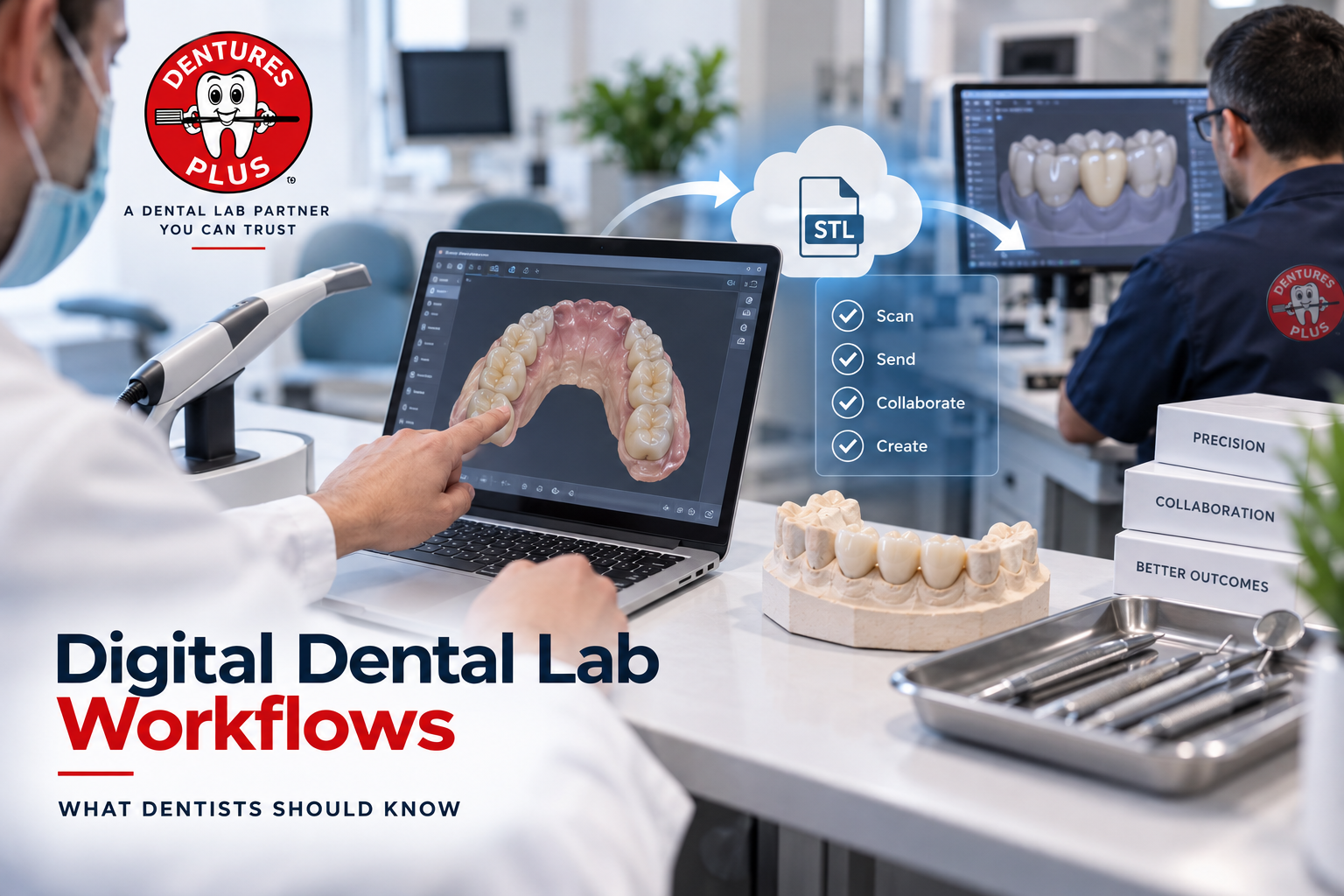
Digital dentistry has changed the way dental practices and laboratories communicate. Instead of relying entirely on physical impressions, paperwork, and traditional case transfers, dentists can now send digital case information directly to a dental laboratory.
For dental practices, this can create a more connected workflow from the intraoral scan to laboratory production. But having digital technology alone is not enough. The quality of the workflow also depends on accurate files, clear prescriptions, good communication, and a laboratory that understands how to work with digital cases.
Here is what dentists should know about digital dental laboratory workflows.
What Is a Digital Dental Lab Workflow?
A digital dental lab workflow is a process in which digital information from a dental practice is transferred to a laboratory for planning, designing, and producing a dental restoration or appliance.
Depending on the case, the workflow may include:
• Intraoral scanning
• Digital impressions
• STL files
• Digital case prescriptions
• CAD design
• Digital communication between the practice and laboratory
• Computer-aided manufacturing
• 3D printing or other laboratory production methods
Instead of physically transferring every part of a case, much of the information can be shared electronically when the practice and laboratory have compatible systems.
1. The Process Often Starts With an Intraoral Scan
For practices using digital dentistry, an intraoral scanner can capture digital information about the patient's oral structures.
The resulting digital file can then become part of the laboratory case submission.
This can be particularly useful for restorative cases where the laboratory needs an accurate digital representation of the areas being restored.
However, the scan is only one part of the case.
The laboratory may also need the dentist's prescription, shade information, photographs, bite records, restoration requirements, and other case-specific instructions.
2. STL Files Connect the Practice and Laboratory
STL files are commonly used to transfer digital 3D information in dental workflows.
For a dentist, the process can be as simple as exporting the required digital files and submitting them to the laboratory along with the case prescription and supporting information.
A laboratory that accepts digital files can then use that information as part of its design and production workflow.
At Dentures Plus, digital workflows are part of our laboratory services, including support for major intraoral scans and STL files.
3. A Digital Case Still Needs a Clear Prescription
One common misconception is that sending a digital scan means the laboratory has everything it needs.
It doesn't necessarily.
The laboratory still needs to understand what the dentist wants produced.
A digital case submission may include information such as:
• Restoration type
• Teeth involved
• Material requirements
• Shade
• Occlusal information
• Design preferences
• Photographs
• Special instructions
The digital file provides important clinical information, while the prescription provides the laboratory with the dentist's specific requirements.
Both are important.
4. Digital Communication Can Simplify Case Management
One of the major advantages of a digital workflow is the ability to transfer case information electronically.
Instead of waiting for physical impressions or paperwork to move between locations, digital files can be submitted through the laboratory's supported workflow.
This can make communication more convenient for dental practices and laboratories.
If a question comes up, the dentist and laboratory can also communicate about the digital case before production moves forward.
5. CAD Design Is an Important Part of the Workflow
Once the laboratory receives the necessary case information, digital design tools can be used for applicable restorations and appliances.
CAD software can help the laboratory team plan the shape and design of a restoration within the digital workflow.
Depending on the case, the design process may involve consideration of:
• Tooth anatomy
• Restoration contours
• Contacts
• Occlusion
• Available space
• Esthetic requirements
The exact process depends on the type of restoration and the laboratory's production workflow.
6. Digital Does Not Mean Fully Automated
Technology can make certain parts of the process more efficient, but dental laboratory work still requires professional judgment and attention to detail.
A digital file does not automatically determine every clinical or laboratory requirement.
The laboratory team still needs to interpret the prescription, review the submitted information, identify potential issues, and manage the production process appropriately.
This is why experienced laboratory support remains important even as digital technology becomes more common.
7. Digital Workflows Can Work Alongside Traditional Methods
Not every dental case or practice uses the same workflow.
Some practices may primarily use intraoral scanning, while others may continue to use traditional impressions for certain cases.
A dental laboratory may therefore need to support both digital and traditional case workflows.
For dentists, the important consideration is having a laboratory partner that can work with the submission methods their practice actually uses.
8. Communication Still Matters
Digital technology can make information easier to transfer, but it does not replace communication between the dentist and laboratory.
If a case includes a specific esthetic requirement, unusual preparation, special design request, or other important consideration, that information should be clearly communicated.
Likewise, if the laboratory identifies something that requires clarification, there should be an easy way to contact the dental practice.
A strong digital workflow combines technology with communication.
9. What Dentists Should Check Before Sending a Digital Case
Before submitting a digital case, dentists can use a simple checklist:
Digital Case Checklist
• Are the required scans complete?
• Are the correct files attached?
• Is the restoration clearly specified?
• Are the teeth involved correctly identified?
• Is the bite information included when required?
• Is the shade information provided?
• Are photographs included when useful?
• Are special instructions clearly written?
• Are there any case-specific requirements the laboratory should know?
Taking a moment to review the submission can help ensure that the laboratory receives the information needed to process the case.
10. Choosing a Dental Lab for Digital Cases
Not every laboratory has the same digital capabilities or workflow.
Dentists considering a digital laboratory partner can look at several practical factors:
Digital File Support
Can the laboratory accept the digital files generated by the scanning system used by the practice?
Laboratory Experience
Does the laboratory have experience working with digital restorative cases?
Communication
Is there a straightforward process for discussing cases and resolving questions?
Range of Services
Can the laboratory support the different types of restorations and appliances that the practice regularly sends?
Traditional and Digital Workflows
Can the laboratory accommodate the practice if some cases are submitted digitally and others through traditional methods?
These considerations can help a dental practice find a laboratory workflow that fits its needs.
How Dentures Plus Supports Digital Dental Workflows
Dentures Plus combines digital capabilities with traditional dental laboratory experience to support dentists and dental clinics.
Our services include crowns and bridges, implant restorations, dentures, partial dentures, veneers, dental appliances and other laboratory solutions.
We also accept major intraoral scans and STL files as part of our digital case workflow.
For dental professionals, the goal is not simply to use digital technology. It is to create a laboratory workflow that combines digital information, experienced craftsmanship and clear communication.
Final Thoughts
Digital dental workflows are becoming an increasingly important part of how dental practices and laboratories work together.
Intraoral scans, STL files, CAD design and digital case communication can make the exchange of information more connected and convenient.
But technology is only one part of the process.
Accurate digital files, complete case information, clear instructions and reliable communication remain essential to a successful dentist-laboratory workflow.
For dentists, choosing a dental laboratory that understands both the technology and the practical needs of the dental practice can make digital case collaboration much easier.