Implant Restorations: What Dentists Should Expect From Their Dental Lab


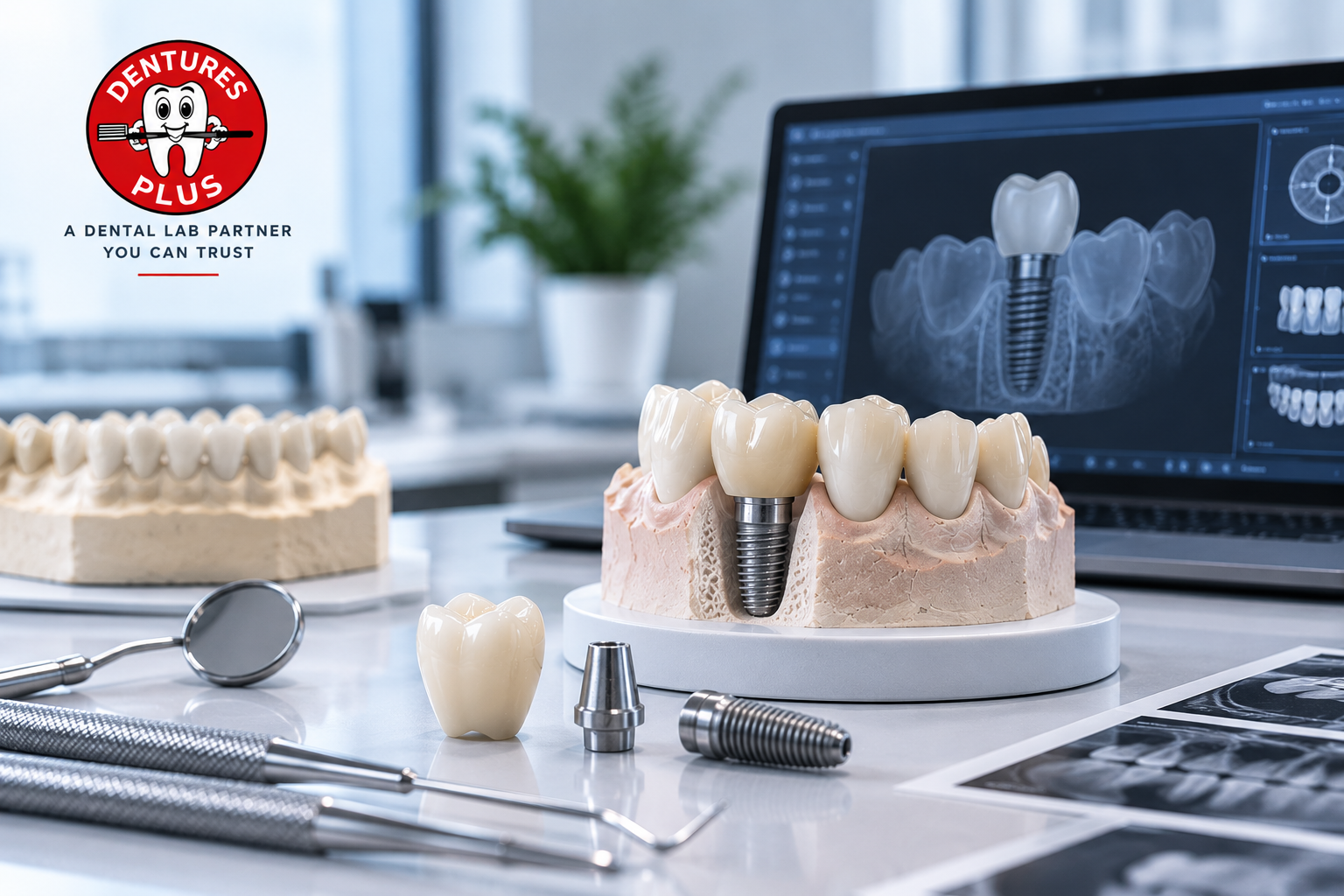
When a dental practice plans an implant restoration, the surgical placement of the implant is only one part of the overall treatment process. The restoration that follows also requires careful planning, accurate case information, appropriate materials, and close communication between the dentist and dental laboratory.
For dentists, choosing the right laboratory partner can make the restorative side of implant cases more organized and predictable.
A dental lab's role is to take the information provided by the dental practice and use it to fabricate the prescribed restoration according to the requirements of the case. That may include a crown, bridge, or denture supported by dental implants.
So, what should dentists look for when choosing a dental lab for implant restorations?
What Is an Implant Restoration?
An implant restoration is the prosthetic component that is attached to a dental implant. Depending on the treatment plan, it can involve a single crown, multiple-unit bridgework, or a denture supported by implants.
The dental implant itself and the final restoration are different parts of the treatment process. The dental practice manages the clinical aspects of the case, while the laboratory focuses on fabricating the prescribed restoration.
That makes communication between the dentist and laboratory particularly important.
Why the Dental Lab Matters in Implant Cases
Implant cases can require more detailed communication than a routine restoration.
The laboratory may need digital scans, impressions, photographs, shade information, implant-related case details, and specific instructions from the dentist.
The quality of the information received by the laboratory can influence how efficiently the case moves through the laboratory workflow.
A good laboratory partner should therefore have a clear process for receiving, reviewing, and working with the information supplied by the dental practice.
Accurate Case Information Is the Starting Point
Every implant restoration begins with the information supplied by the dental team.
Depending on the case and the dentist's workflow, this may include:
• Digital intraoral scans
• STL files
• Traditional impressions
• Photographs
• Shade information
• Bite or occlusal records
• Implant-related specifications
• Restoration design requirements
• Additional case instructions
Dentures Plus states that it accepts major intraoral scans and STL files to support digital collaboration with its dental partners.
The more clearly the laboratory understands the case requirements, the easier it is to work toward the restoration prescribed by the dentist.
Digital Dentistry Has Changed Implant Workflows
Digital dentistry has made communication between dental practices and laboratories increasingly connected.
Instead of relying only on physical impressions and models, practices can submit digital information that can be reviewed as part of a digital laboratory workflow.
Digital scans and CAD-based workflows can help laboratories work with detailed digital representations of the patient's case.
For dental practices already using digital impressions, finding a lab that can work comfortably with digital files can be an important consideration.
However, technology is only one part of the process. Digital tools still need to be combined with experienced laboratory technicians and careful case review.
Communication Between the Dentist and Lab Is Essential
Implant restorations can involve case-specific requirements that shouldn't be left to assumption.
If the laboratory has a question about a case, it should be able to communicate with the dental practice before moving forward.
Likewise, dentists should have a clear way to provide additional instructions when a case requires something specific.
Good communication can involve:
• Reviewing case prescriptions
• Confirming restoration requirements
• Discussing shade and esthetic expectations
• Clarifying digital files
• Addressing case-specific questions
• Communicating changes or revisions
A strong dentist-lab relationship is built through this kind of communication over time.
Esthetics Matter as Much as the Technical Details
For implant restorations, the technical requirements are important, but esthetics can also be a major consideration.
The restoration may need to complement the surrounding teeth in terms of:
• Shape
• Shade
• Proportion
• Surface characteristics
• Overall appearance
For anterior cases in particular, small visual details can become more noticeable.
This is another reason why photographs, shade information, and clear instructions from the dental practice can be valuable when submitting a case to the laboratory.
The dentist understands the patient's clinical situation, while the laboratory brings its own technical and fabrication expertise to the restoration process.
What Should Dentists Look for in an Implant Restoration Lab?
Not every dental practice has the same needs, so there is no single laboratory that is right for everyone.
However, dentists evaluating a laboratory partner may want to consider several factors.
Experience With Implant Restorations
Ask whether the laboratory regularly handles implant restoration cases and understands the laboratory requirements involved.
Digital Capabilities
If your practice uses digital impressions, determine whether the lab can work with your preferred digital workflow and file formats.
Communication
A laboratory should provide a clear way for dental professionals to ask questions and discuss case requirements.
Range of Services
A full-service laboratory may be able to support a practice with implant crowns, bridges, dentures, and other restorative needs rather than limiting the relationship to one type of case.
Consistency
Quality isn't just about one successful restoration. Dentists should look for consistent laboratory work and dependable case handling over time.
Professional Support
The best laboratory relationship should feel like a professional partnership rather than simply sending a case to a vendor.
Implant Restorations Require a Team Approach
A successful restorative workflow involves multiple people.
The dentist brings clinical knowledge and understands the patient's treatment requirements. The dental laboratory brings technical expertise, materials knowledge, digital capabilities, and fabrication experience.
Neither side works in isolation.
When both sides communicate clearly and understand their respective responsibilities, the workflow can become more efficient and easier to manage.
This collaborative approach is particularly valuable when cases have specific restorative or esthetic requirements.
Why Dentists in San Jose May Consider a Local Dental Lab
For dental practices in San Jose and nearby communities, working with a local dental laboratory can provide an opportunity to build a long-term professional relationship.
Dentists may value having a laboratory partner that understands their workflow and can communicate directly about cases.
Dentures Plus is located in San Jose and serves dental professionals with a range of laboratory services, including implant restorations, crowns and bridges, dentures, and other dental solutions.
A local relationship isn't automatically the right choice for every practice, but accessibility and professional communication can be valuable factors when evaluating a laboratory partner.
Why Dentures Plus for Implant Restorations?
At Dentures Plus, implant restoration is part of our full-service dental laboratory offering.
We work with dental professionals on restorative cases involving crowns, bridges, dentures, and implant restorations. Our laboratory also supports digital workflows by accepting major intraoral scans and STL files.
Our focus is on combining laboratory craftsmanship, digital capabilities, and professional communication to support the needs of dental practices.
For dentists, that means having a laboratory partner that understands the importance of the details behind every case.
Final Thoughts
Implant restoration is more than simply fabricating a crown, bridge, or denture.
The process depends on accurate case information, clear communication, appropriate laboratory workflows, and careful fabrication.
For dentists, choosing an implant restoration laboratory should therefore involve more than comparing prices. Experience, digital capabilities, communication, consistency, and the ability to understand case-specific requirements all deserve consideration.
A reliable dental laboratory can become an important part of a dental practice's restorative workflow.
Looking for a dental lab partner for implant restorations in San Jose? Dentures Plus supports dentists and dental clinics with professional laboratory services and modern digital workflows.