How Dental Labs Ensure Quality in Crown and Bridge Restorations


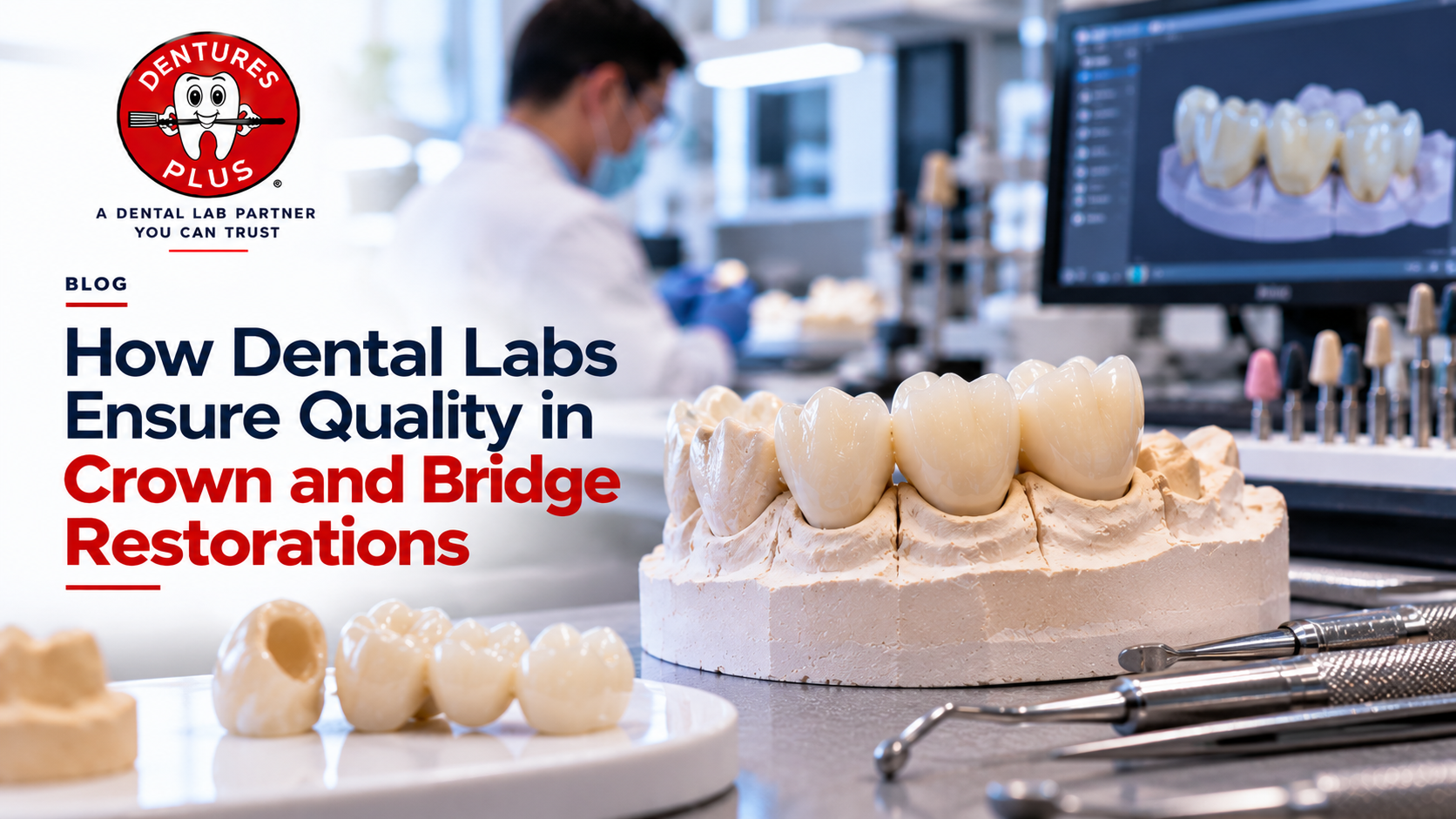
When dentists choose a dental laboratory for crown and bridge restorations, quality is one of the most important considerations. A well-made restoration requires more than good materials—it also depends on accurate case information, careful laboratory work, attention to detail, and consistent quality control.
For dentists, understanding how a dental lab approaches quality can make it easier to choose the right laboratory partner for their restorative cases.
What Are Crown and Bridge Restorations?
Crowns are used to restore or protect damaged teeth, while bridges can replace one or more missing teeth by using surrounding teeth or other supporting structures.
Although the clinical treatment takes place in the dental practice, the dental laboratory plays an important role in creating the restoration according to the dentist's prescription and case requirements.
1. Accurate Case Information
Quality begins before the restoration is fabricated.
A dental laboratory needs accurate information from the dental practice, which may include:
• Impressions or digital scans
• Preparation details
• Bite records
• Shade information
• Photographs when appropriate
• Restoration type
• Material preferences
• Specific case instructions
Clear and complete case information helps the laboratory understand exactly what the dentist expects.
2. Careful Model and Digital Workflow
Depending on the case, a laboratory may work with traditional physical models or digital files.
Digital workflows can allow dental technicians to use computer-aided design tools when planning applicable restorations. Traditional laboratory techniques also remain important for many cases.
Regardless of the workflow, careful handling of the case information is essential.
3. Material Selection Matters
Different crown and bridge cases may require different restorative materials.
The choice can depend on factors such as:
• Location of the restoration
• Functional requirements
• Esthetic expectations
• Dentist's prescription
• Patient-specific considerations
A dental laboratory should work according to the dentist's selected material and case requirements rather than treating every restoration in exactly the same way.
4. Attention to Fit and Function
A restoration needs to be carefully evaluated as part of the laboratory process.
Depending on the case, technicians may review factors such as:
• Marginal adaptation
• Contacts
• Occlusion
• Anatomy
• Contours
• Overall restoration design
These details can influence how the restoration integrates into the overall treatment plan.
5. Esthetics and Natural Appearance
For visible restorations, appearance is an important consideration.
Technicians may pay attention to factors such as:
• Shade
• Translucency
• Surface texture
• Tooth anatomy
• Contours
• Proportion
The goal is to create a restoration that follows the dentist's prescription and complements the surrounding dentition.
6. Finishing and Polishing
The laboratory process does not end when the restoration is fabricated.
Finishing and polishing are important steps in preparing applicable crown and bridge restorations.
Careful finishing can help achieve the desired surface appearance and overall presentation of the restoration.
This is where experienced laboratory craftsmanship can make a noticeable difference.
7. Quality Control Before Delivery
Before a case leaves the laboratory, it should go through an appropriate quality-control process.
Depending on the restoration, the laboratory team may review:
• Case identification
• Restoration design
• Fit-related details
• Contacts
• Occlusion
• Shade and esthetics
• Finishing and polishing
• Prescription requirements
A consistent review process helps identify issues before the restoration reaches the dental practice.
8. Communication Between Dentist and Lab
Even advanced laboratory technology cannot replace communication.
If a case has specific requirements, the dentist and laboratory should have a clear understanding of those requirements before production begins.
Good communication can help reduce misunderstandings and make the workflow more efficient.
For dentists, having a dental laboratory that is responsive and understands their preferences can be especially valuable when handling complex restorative cases.
9. Why Experience Still Matters
Modern dental laboratories have access to increasingly advanced digital tools and manufacturing technologies.
However, technology is only one part of the process.
Experienced dental technicians still play an important role in reviewing cases, understanding prescriptions, making appropriate adjustments, and maintaining consistent laboratory standards.
The combination of technology, experience, and quality control can provide a more dependable laboratory workflow.
How Dentists Can Choose the Right Crown and Bridge Lab
When selecting a dental laboratory, dentists may want to ask:
• What crown and bridge materials does the lab work with?
• Does the lab accept digital scans?
• How does the lab handle quality control?
• How does the lab communicate about case requirements?
• Can the laboratory accommodate specific esthetic preferences?
• What is the process for handling adjustments or remakes?
• Does the lab have experience with the types of restorations the practice commonly prescribes?
These questions can help dentists find a laboratory that fits their clinical workflow.
Crown and Bridge Support at Dentures Plus
At Dentures Plus, we work with dentists and dental clinics to provide dependable laboratory support for restorative cases.
Our approach combines careful craftsmanship, attention to case requirements, modern dental laboratory capabilities, and professional communication.
For crown and bridge restorations, every case deserves attention to detail—from receiving the prescription through fabrication, finishing, and final quality review.
Final Thoughts
Quality crown and bridge restorations depend on more than the final product.
Accurate case information, appropriate materials, careful laboratory techniques, esthetic attention, finishing, quality control, and communication between the dentist and laboratory all contribute to the overall workflow.
For dentists, choosing a dental laboratory that understands these details can help create a more reliable restorative process.
At Dentures Plus, our focus is simple: dependable laboratory support, careful craftsmanship, and quality restorations for dental professionals.