Denture Lab in San Jose, CA: A Dentist's Guide


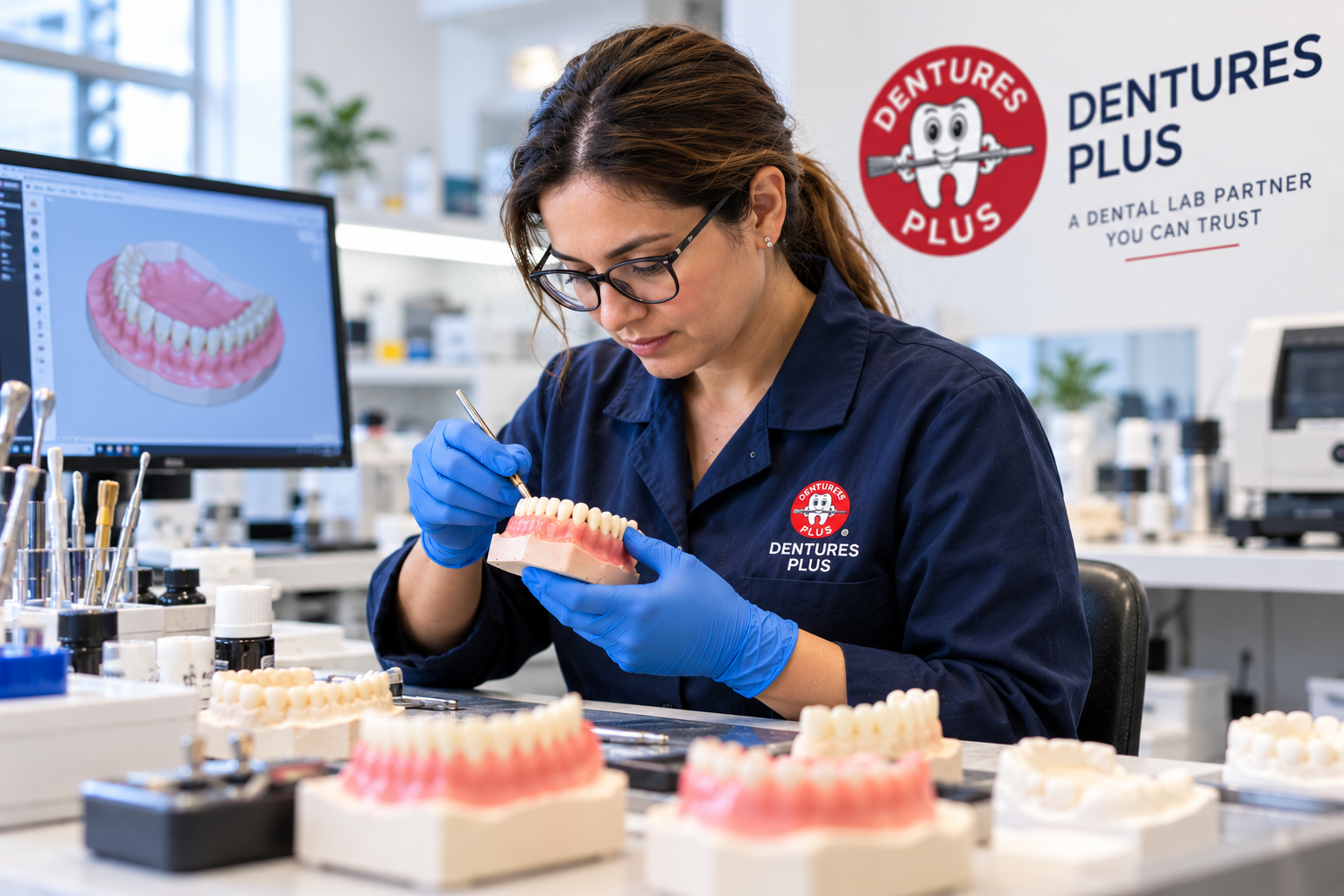
Dentures remain an important part of restorative dental care, and the dental laboratory plays an important role in the process. For dentists, choosing the right laboratory can affect how smoothly denture cases move from prescription and impressions or digital files through design, fabrication, finishing, and delivery.
For dental practices in San Jose, working with a denture lab that understands both clinical requirements and laboratory workflows can make case communication and coordination easier.
So, what should dentists look for when choosing a denture laboratory?
What Does a Denture Lab Do?
A denture laboratory works with dental professionals to fabricate removable dental prostheses based on the dentist's prescription and case information.
Depending on the case, laboratory work may include:
• Full dentures
• Partial dentures
• Denture repairs and related laboratory work
• Digital denture workflows
• Denture design and fabrication
• Finishing and polishing
• Case-specific adjustments and laboratory communication
The dentist remains responsible for diagnosis and treatment planning, while the laboratory supports the fabrication side of the case.
A strong working relationship between the dental practice and laboratory can help keep this process organized.
Full Dentures vs. Partial Dentures
One of the first things dentists should consider is whether a laboratory has experience with both full and partial denture cases.
Full Dentures
Full dentures replace a complete arch of missing teeth. These cases require careful attention to the information provided by the dental practice, including impressions or digital data, jaw relationships, tooth selection, shade, and other case-specific instructions.
Partial Dentures
Partial dentures replace some missing teeth while working around the patient's remaining natural teeth.
These cases may involve additional considerations related to the remaining dentition, design, framework, and other prescription details.
Because full and partial dentures have different laboratory requirements, dentists may prefer a laboratory that can support both workflows.
Why Case Information Matters
A denture laboratory can only work with the information provided by the dental practice.
Clear case instructions can help the laboratory understand what the dentist expects before production begins.
Depending on the case, information may include:
• Patient and case identification
• Prescription details
• Impressions or digital scans
• Bite or occlusal information
• Tooth shade and selection
• Denture design instructions
• Photos when relevant
• Existing prosthesis information
• Special laboratory instructions
If important information is missing or unclear, the laboratory may need to contact the dental office before continuing with the case.
Clear communication at the beginning can help reduce unnecessary back-and-forth during the workflow.
Digital Denture Workflows Are Changing Laboratory Processes
Digital dentistry has also influenced how dentures are designed and produced.
Dental practices may submit intraoral scans or other digital files to their laboratory rather than relying exclusively on traditional impressions.
A modern denture laboratory in San Jose, CA may support digital workflows involving:
• Digital scans
• STL files
• Computer-aided design
• Digital denture design
• 3D printing
• Digital case communication
Digital technology can make certain parts of the workflow more efficient, but technology does not replace laboratory experience.
The quality of the final workflow still depends on accurate case information, appropriate design, experienced technicians, and quality-control processes.
What Should Dentists Look for in a Denture Lab?
Choosing a denture laboratory should involve more than comparing laboratory fees.
Here are several factors dentists should consider.
1. Experience With Denture Cases
Ask about the laboratory's experience with the types of denture cases your practice regularly handles.
If your practice works with both complete and partial dentures, a laboratory with experience in both can simplify case management.
2. Clear Communication
A laboratory should have a straightforward process for communicating with the dental office.
Questions about prescriptions, design, shade, scans, or other case details should be addressed before they become larger workflow problems.
3. Digital Capabilities
If your practice uses intraoral scanners, ask whether the laboratory accepts your digital files and understands your digital submission workflow.
This is particularly important for practices that are gradually moving from traditional impressions toward digital dentistry.
4. Traditional Laboratory Support
Digital dentistry is growing, but traditional laboratory workflows remain relevant.
Dentists should consider whether a lab can work with the type of cases and materials their practice actually uses.
5. Quality-Control Process
Ask how the laboratory reviews denture cases before they are sent back to the dental practice.
Quality control may involve reviewing the restoration's design, finishing, appearance, and other case-specific requirements.
6. Communication During Complex Cases
Some denture cases require more discussion than others.
A good laboratory partner should be willing to communicate with the dental team when additional information or clarification is required.
Why Local Denture Laboratory Support Can Be Valuable
For dentists in San Jose and surrounding communities, choosing a local laboratory can provide an opportunity to develop a direct professional relationship.
A local San Jose denture lab may be easier for dental practices to communicate with and can become familiar with the practice's preferred case submission process and laboratory requirements.
However, location should not be the only deciding factor.
Dentists should also evaluate experience, communication, services, digital capabilities, quality control, and how well the laboratory fits into their existing workflow.
Dentures Plus: Supporting Dentists With Denture Laboratory Services
Dentures Plus is a dental laboratory in San Jose, CA, serving dentists and dental clinics with laboratory services including full and partial dentures.
The laboratory combines experienced dental laboratory craftsmanship with modern digital workflows to support dental professionals throughout the case process.
Dentures Plus also supports other laboratory services, including crowns and bridges, implant restorations, veneers, dental appliances, and digital dentistry.
For dental practices, the goal is to provide dependable laboratory support, clear communication, and a workflow that works alongside the clinical team.
Questions Dentists Should Ask a Denture Laboratory
Before choosing a new denture lab, a dental practice may want to ask:
• Do you fabricate both full and partial dentures?
• Do you accept digital scans and STL files?
• Can you support traditional impression workflows?
• What information do you require with each denture case?
• How do you handle unclear case instructions?
• What quality-control steps do you follow?
• Can your laboratory support more complex denture cases?
• How does your team communicate with dentists during a case?
• What digital denture capabilities do you offer?
• Can your laboratory support our practice's regular workflow?
These questions can help dentists compare laboratories based on actual workflow needs rather than price alone.
Final Thoughts
Choosing the right denture lab in San Jose can be an important part of building a dependable dental laboratory relationship.
Dentists should look for a laboratory that understands full and partial denture workflows, communicates clearly, supports the practice's preferred submission process, and maintains appropriate quality-control procedures.
Whether a practice primarily uses traditional impressions, digital scans, or a combination of both, the right laboratory partner should be able to work with the practice's workflow and provide professional laboratory support.
For dental professionals in San Jose, evaluating these factors can make it easier to identify a denture laboratory that fits their practice and supports their long-term case workflow.
FAQ
What should dentists look for in a denture lab in San Jose?
Dentists should consider experience with full and partial dentures, communication, digital capabilities, traditional laboratory support, quality control, and compatibility with their practice workflow.
Do denture labs accept digital scans?
Many modern dental laboratories support digital case submissions, including intraoral scans and STL files. Dentists should confirm the specific digital workflow and file formats accepted by their laboratory.
What information should dentists send with a denture case?
Depending on the case, dentists may need to provide the prescription, impressions or digital scans, bite information, tooth selection, shade, photographs, design instructions, and other case-specific details.
Can a dental lab make both full and partial dentures?
Yes, many dental laboratories provide both full and partial denture services. Dentists should confirm the laboratory's specific capabilities before submitting cases.
Does Dentures Plus provide denture laboratory services?
Yes. Dentures Plus is a San Jose dental laboratory serving dentists and dental clinics with full and partial denture laboratory services, along with other restorative and digital laboratory services.