
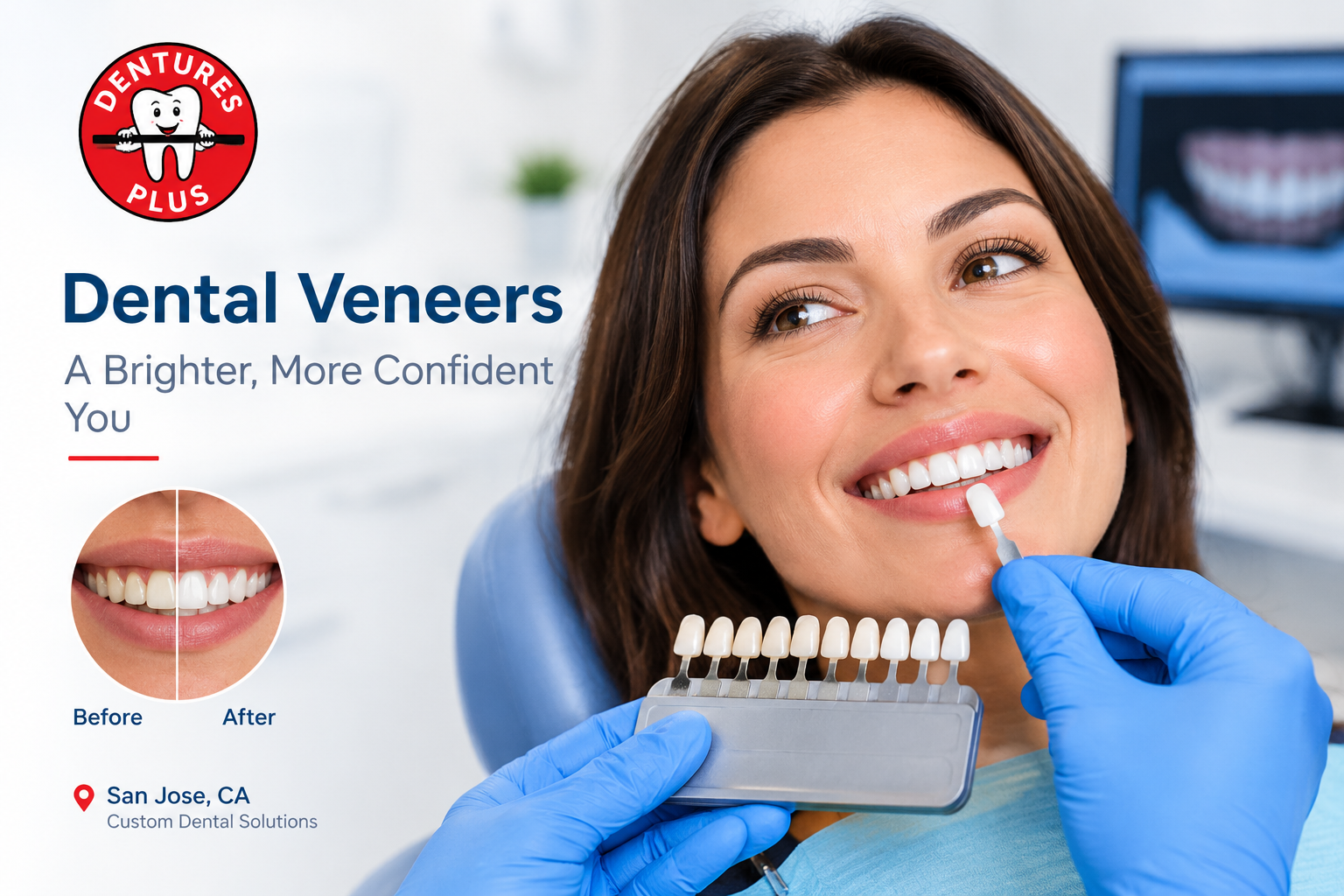
A smile doesn't have to be perfect to look good. In fact, some of the most natural-looking smiles have small differences in tooth shape, color, and size.
Still, there are times when a chipped tooth, stubborn discoloration, uneven shape, or small gap makes someone feel less confident about their smile. Dental veneers can be one option for addressing some of these cosmetic concerns.
For patients considering dental veneers in San Jose, CA, it helps to understand what veneers actually do, what types are available, how the process works, and what role the dental laboratory plays in creating the final restoration.
This guide covers the basics so you know what to discuss with your dentist before moving forward.
Dental veneers are thin, custom-made restorations designed to cover the front surface of a tooth.
Unlike a crown, which generally covers a much larger portion of the tooth, a veneer is primarily focused on the visible front surface. This makes veneers particularly useful for selected cosmetic cases where the underlying tooth is suitable for this type of restoration.
Depending on the material and treatment plan, veneers may help improve the appearance of:
The goal is not simply to make teeth extremely white. Good veneer treatment should create a smile that looks balanced and appropriate for the individual patient.
One reason veneers continue to be popular is that they can address several cosmetic concerns at once.
Someone may have relatively healthy teeth but dislike the way a few teeth look when they smile. Whitening may improve the color, but it won't necessarily change the shape of a chipped or unusually shaped tooth.
Veneers can sometimes address those concerns as part of one carefully planned treatment.
The final result depends heavily on the individual case, however. Veneers aren't appropriate for everyone, and a dentist should evaluate the teeth and gums before recommending treatment.
If you've started researching veneers, you've probably come across two common options: porcelain and composite veneers.
They are not the same thing.
Porcelain veneers are custom-made restorations fabricated outside the mouth, usually with the help of a dental laboratory.
They are valued for their natural appearance and durability. Porcelain also has good resistance to staining compared with many resin-based materials.
The process usually involves careful shade selection, tooth preparation when necessary, impressions or digital scans, laboratory fabrication, and final bonding by the dentist.
Because every veneer is custom-made, communication between the dentist and dental laboratory is an important part of the process.
Composite veneers are made using tooth-colored resin that is applied and shaped directly on the tooth or fabricated using a composite workflow.
They can be a practical option in selected cases and may require less preparation depending on the circumstances.
However, composite and porcelain have different characteristics, so the right choice depends on factors such as the patient's teeth, cosmetic goals, bite, budget, and the dentist's recommendation.
There isn't one material that is automatically right for every patient.
The exact process varies from patient to patient, but porcelain veneer treatment generally follows a series of steps.
The first step is a consultation with your dentist.
Your dentist will examine your teeth and gums and discuss what you would like to change. If there is untreated decay, gum disease, or another underlying problem, that issue may need to be addressed before cosmetic treatment.
This step is important because veneers are not designed to hide untreated dental problems.
Once veneers are considered appropriate, the dentist and dental laboratory can begin planning the restoration.
Things such as tooth shape, size, color, proportions, and the patient's overall smile are considered.
A good result isn't necessarily the whitest possible smile. It should look natural and work well with the surrounding teeth.
Depending on the veneer design and the individual case, the dentist may need to remove a small amount of enamel from the front of the tooth.
The amount of preparation varies.
Patients should understand that traditional porcelain veneer treatment can involve permanent changes to the tooth, which is why careful planning and professional evaluation matter.
The dentist may use traditional impressions or digital scanning technology to capture the shape of the teeth.
That information is used to create a detailed record for the dental laboratory.
Accurate records are essential. A beautifully designed restoration cannot compensate for inaccurate information at the beginning of the process.
This is where the dental laboratory becomes an important part of the treatment.
The laboratory uses the dentist's prescription, clinical records, photographs, scans, shade information, and other relevant details to fabricate the veneers.
The technician has to consider much more than simply making a white shell.
Tooth shape, surface texture, translucency, proportions, and how the restoration relates to neighboring teeth all influence the final appearance.
Before the final bonding, the dentist evaluates the veneers in the patient's mouth.
Fit, appearance, color, and overall smile harmony are checked.
If everything is appropriate, the dentist bonds the veneers to the teeth.
This is one of the most important questions to ask.
A natural tooth isn't completely flat or one solid color. It has subtle variations in translucency, texture, and shade.
The same principle applies to well-designed veneers.
A good restoration should blend with the patient's smile rather than immediately drawing attention to itself.
Factors that influence the appearance include:
This is why experienced dental laboratory craftsmanship can make a meaningful difference.
No.
Veneers are primarily cosmetic restorations, so the underlying oral health needs to be considered first.
Patients with untreated cavities, active gum disease, significant tooth damage, or certain bite problems may need other treatment before veneers can be considered.
People who regularly grind or clench their teeth may also require additional evaluation.
Your dentist will determine whether veneers are appropriate and whether another treatment would provide a better long-term solution.
There is no guaranteed lifespan for a veneer.
Longevity depends on several factors, including:
Porcelain veneers are generally considered a long-term cosmetic restoration, but they are not indestructible.
Taking care of your veneers and maintaining regular dental visits can help protect both the restorations and the natural teeth underneath them.
Veneers don't eliminate the need for normal oral hygiene.
In fact, caring for the teeth and gums around the veneers remains extremely important.
A good routine includes:
While porcelain itself is resistant to staining, the surrounding natural teeth and gums still need proper care.
This is a common concern.
The answer depends on the type of veneer, the planned design, and the patient's individual teeth.
Some cases may require minimal preparation, while conventional porcelain veneers can require removal of a small amount of enamel.
That's why it is important not to choose veneers based solely on advertisements promising "no-prep" or "minimal-prep" treatment.
Your dentist should determine what preparation, if any, is appropriate for your particular case.
Patients often see the dentist during the treatment process, but much of the detailed restoration work happens behind the scenes.
The dental laboratory receives information from the dental practice and uses it to create the custom restoration.
For veneers, this can involve:
The laboratory and dentist essentially work as a team.
Clear communication between both sides can help reduce misunderstandings and improve consistency from the initial prescription through the final restoration.
For dental practices in San Jose and the surrounding Bay Area, working with a dental laboratory that understands the requirements of cosmetic restorations can make the workflow easier.
A local or conveniently accessible laboratory relationship can also make communication more straightforward when a case requires clarification, shade discussion, design feedback, or adjustments.
At Dentures Plus, we work with dental professionals to provide custom dental restorations, including veneer solutions, with an emphasis on careful fabrication and communication throughout the laboratory process.
The objective isn't to make every smile look the same.
It's to create a restoration that works for the individual case.
The cost of veneers can vary considerably.
There isn't a single price that applies to every patient because several factors influence the total treatment cost, including:
Porcelain veneers and composite veneers can also have different costs.
If you're considering veneers in San Jose, the best way to understand the cost is to have a dentist evaluate your teeth and provide a treatment plan based on your specific needs.
Be cautious about choosing a cosmetic dental treatment based only on the lowest advertised price. The quality of planning, clinical treatment, materials, and laboratory fabrication all contribute to the final result.
Before committing to treatment, it can help to ask a few straightforward questions:
These questions can give you a much clearer picture of what you're actually paying for and what to expect from treatment.
A successful veneer case isn't created by one person working alone.
The dentist evaluates the patient and determines whether veneers are appropriate. The dental laboratory turns the clinical information into a custom restoration. The patient plays an equally important role by following care instructions and maintaining good oral health.
When those pieces work together, the result can be both attractive and functional.
That's why choosing an experienced dental team and laboratory is more important than simply choosing the trendiest cosmetic treatment.
Dental veneers can be a useful option for improving selected cosmetic concerns, including discoloration, minor chips, uneven tooth shapes, and small gaps.
But good veneer treatment starts long before the final restoration is bonded to the teeth.
It starts with a proper dental evaluation, realistic expectations, thoughtful smile planning, accurate records, and communication between the dentist and dental laboratory.
If you're considering dental veneers in San Jose, CA, speak with your dentist about whether veneers are appropriate for your smile and what type of restoration would make the most sense.
At Dentures Plus, we work with dental professionals to create custom dental restorations designed around the needs of each case.