Dental Lab Turnaround Time in California: What Dentists Should Know


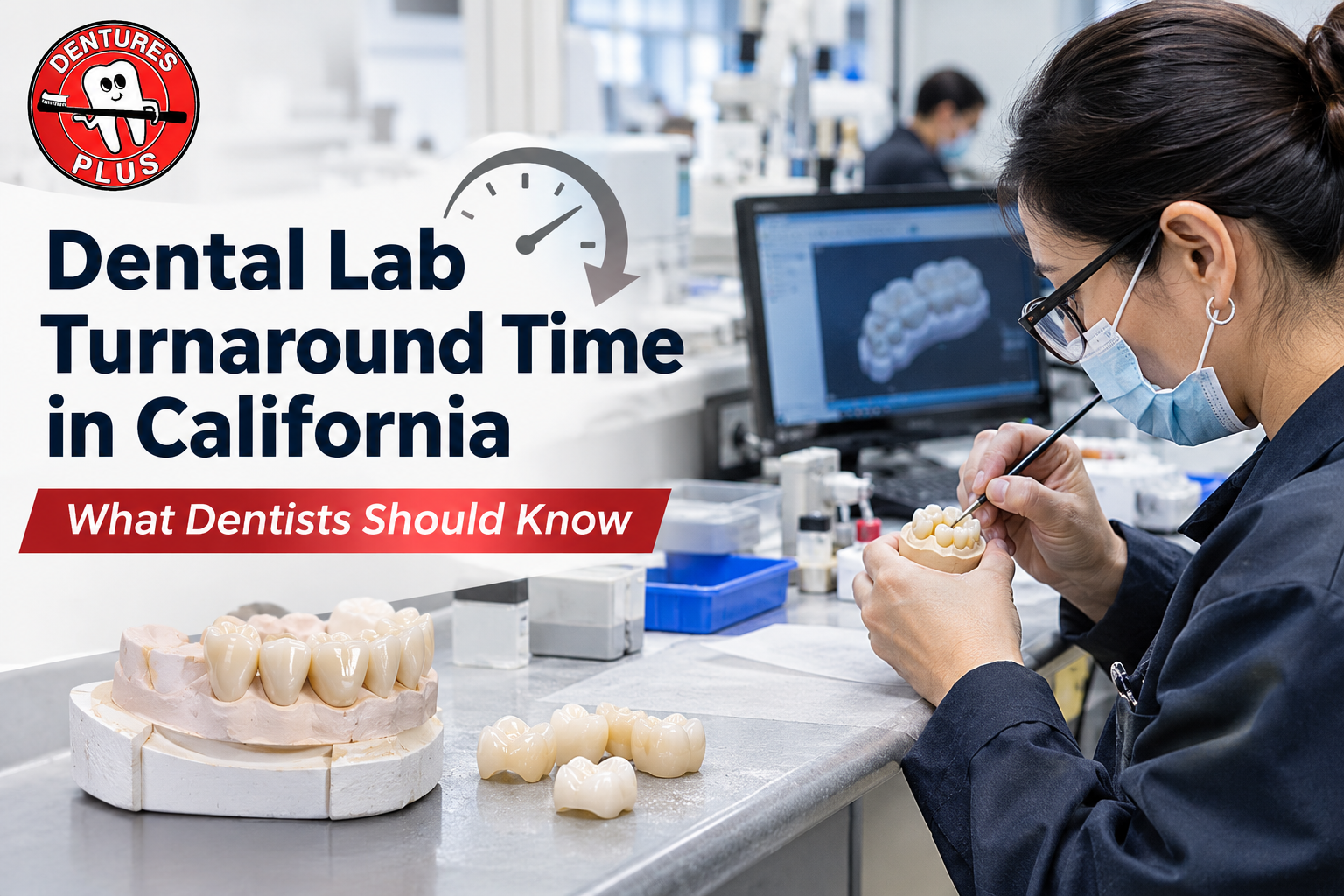
Dental laboratory turnaround time is an important consideration for dental practices planning restorative treatments and patient appointments. From crowns and bridges to dentures and implant restorations, every laboratory case requires specific steps before the finished restoration is ready for clinical evaluation.
For dentists in California, understanding how dental laboratories manage production timelines can help improve appointment planning, case coordination, and communication with patients.
However, turnaround time is not the same for every dental case. It can vary depending on restoration type, case complexity, material selection, clinical records, laboratory workload, and delivery arrangements.
This guide explains the factors that influence dental lab turnaround time and how dental practices can work with their laboratory partners to support an organized workflow.
What Is Dental Lab Turnaround Time?
Dental lab turnaround time refers to the period between a laboratory receiving a case and completing the requested restoration for dispatch or delivery.
The timeline may include several stages:
- Case receipt and identification
- Review of impressions, scans, and prescriptions
- Model preparation or digital case processing
- Restoration design and fabrication
- Finishing and quality inspection
- Packaging and dispatch
The actual duration depends on the type of restoration and the laboratory's production process.
Dentists should confirm expected completion dates directly with their laboratory rather than relying on a standard timeline for every case.
Factors That Affect Dental Laboratory Turnaround Time
Several factors can influence how quickly a dental laboratory completes a case.
1. Type of Dental Restoration
Different restorations require different fabrication procedures.
For example:
Dental Crowns: Crown fabrication involves reviewing preparation records, designing the restoration, processing the selected material, and completing finishing procedures.
Dental Bridges: Bridges may require additional design and fabrication considerations because multiple units must work together.
Complete and Partial Dentures: Denture cases may involve several clinical and laboratory stages, including impressions, records, try-ins where prescribed, processing, and finishing.
Implant Restorations: These cases may require additional component verification, design coordination, and attention to implant system specifications.
Dental Veneers: Veneer cases may require detailed aesthetic communication, shade information, and careful finishing.
The restoration type is therefore an important factor when estimating laboratory production time.
2. Case Complexity
Not every case has the same technical requirements.
A straightforward single-unit restoration may involve fewer production steps than a complex multi-unit or full-mouth restorative case.
Factors that may increase case complexity include:
- Multiple restorations
- Complex implant requirements
- Detailed aesthetic characterization
- Unusual preparation conditions
- Special material requirements
- Additional design instructions
- Multiple clinical stages
Dentists should discuss complex cases with the laboratory before confirming patient appointment dates.
3. Material Selection
The selected restorative material can influence the fabrication workflow.
Different materials have different processing, finishing, and inspection requirements.
For example, zirconia, lithium disilicate, metal-based restorations, and acrylic materials may involve different laboratory procedures.
Material selection should be based on the dentist's clinical requirements, restoration design, and laboratory capabilities.
4. Accuracy of Impressions and Digital Scans
Accurate clinical records help laboratories begin processing cases with the required information.
Incomplete impressions, unclear margins, missing opposing arch records, or incomplete digital scans may require clarification or new records.
This can affect the overall production schedule.
To support an efficient workflow, dentists should review:
- Preparation details
- Margin visibility
- Opposing arch records
- Bite registration, where required
- Scan completeness
- Correct case identification
5. Laboratory Workload and Production Scheduling
Laboratories manage multiple cases with different requirements and delivery dates.
Production schedules may be influenced by:
- Daily case volume
- Restoration complexity
- Available technicians
- Equipment availability
- Material availability
- Priority arrangements
- Quality inspection requirements
A laboratory should communicate realistic timelines based on its current production schedule.
6. Shipping and Delivery Arrangements
For dental practices working with laboratories in different locations, transportation can also affect the overall timeline.
Shipping considerations may include:
- Distance between the laboratory and practice
- Courier collection schedules
- Delivery service selected
- Weekends and public holidays
- Unexpected transportation delays
Dentists should consider delivery time separately from laboratory production time when planning appointments.
Understanding Different Dental Laboratory Workflows
Different restoration types follow different production workflows. Understanding these stages helps dental practices plan cases more effectively.
Crown and Bridge Laboratory Workflow
A typical crown and bridge workflow may include:
- Receiving impressions or digital scans
- Reviewing the preparation and clinical instructions
- Preparing the model or digital design
- Designing the restoration
- Fabricating the crown or bridge
- Finishing and polishing
- Final laboratory inspection
- Packaging and dispatch
Multi-unit bridge cases or cases with special aesthetic requirements may need additional coordination.
Denture Laboratory Workflow
Complete and partial denture cases may involve several clinical and laboratory stages.
Depending on the prescribed treatment, the workflow can include:
- Reviewing impressions
- Preparing working models
- Recording jaw relationships
- Selecting and arranging teeth
- Try-in stage, where required
- Processing the denture
- Finishing and polishing
- Final inspection and dispatch
The number of stages depends on the case and the dentist's treatment plan.
Implant Restoration Workflow
Implant restoration cases require careful coordination between the dental practice and laboratory.
A typical workflow may include:
- Reviewing implant system information
- Checking component specifications
- Reviewing digital scans or impressions
- Preparing the restoration design
- Fabricating the restoration
- Checking fit-related design requirements
- Finishing and inspection
- Dispatching the completed case
Missing implant component details or unclear clinical instructions may delay processing.
Digital Dentistry and Its Impact on Turnaround Time
Digital dentistry has changed how dental practices and laboratories exchange case information.
Instead of relying entirely on physical impressions and models, compatible digital workflows allow practices to transfer scan files electronically.
Some potential workflow advantages include:
Faster Case Transfer: Digital files can be submitted without waiting for physical impressions to arrive.
Organized Case Records: Digital files can support consistent case identification and documentation.
Design Coordination: CAD software allows technicians to review and design certain restorations digitally.
Reduced Physical Handling: Digital submissions can reduce some packaging and transportation steps associated with conventional records.
However, digital workflows do not automatically guarantee faster completion. Scan quality, case complexity, material processing, production capacity, and inspection requirements still influence turnaround time.
Common Reasons for Dental Laboratory Delays
Understanding common causes of delays can help dental practices improve their case submission procedures.
1. Incomplete Case Information
Missing tooth numbers, restoration details, or material instructions can require additional communication.
What helps: Submit a complete laboratory prescription with every case.
2. Poor Impression or Scan Quality
Incomplete records may prevent technicians from accurately reviewing the case.
What helps: Check impressions and digital scans before submission.
3. Missing Supporting Records
Certain restorations require opposing arch records, bite registrations, photographs, or implant component details.
What helps: Review the required documentation for each restoration type.
4. Late Design Clarifications
Unclear aesthetic or technical instructions may require discussion before fabrication can continue.
What helps: Communicate special requirements during initial case submission.
5. Additional Clinical Adjustments
Some cases may require changes after clinical evaluation.
What helps: Provide clear feedback and relevant clinical information when requesting adjustments.
6. Shipping or Courier Delays
Transportation issues may affect the final delivery date even when laboratory fabrication is complete.
What helps: Confirm dispatch arrangements and allow sufficient time for delivery.
How Dentists Can Improve Dental Lab Turnaround Time
Dental practices can take several practical steps to support a smoother laboratory workflow.
1. Submit Complete Case Records
Provide accurate impressions or digital scans, opposing arch records, bite registration, and other required information.
2. Use Standardized Prescriptions
A consistent prescription format helps technicians understand restoration requirements.
Include the tooth number, restoration type, material, shade, and special instructions.
3. Communicate Special Requirements Early
If a case requires specific aesthetic details, implant components, or unusual design considerations, discuss them with the laboratory before production begins.
4. Confirm Completion Dates
Ask the laboratory for an estimated completion date based on the specific case.
Avoid scheduling patient appointments using assumed production timelines.
5. Plan Complex Cases in Advance
Multi-unit restorations, implant cases, and complex denture treatments may require additional coordination.
Early communication helps both teams organize the workflow.
6. Maintain Regular Communication
Keep track of submitted cases and follow up when necessary.
Clear communication helps identify missing information and resolve questions before they affect the schedule.
How to Evaluate a Dental Laboratory's Turnaround Time
When selecting a dental laboratory partner in California, dentists should consider more than the shortest advertised production time.
Important questions include:
- Does the laboratory provide realistic completion estimates?
- Are different restoration types handled through defined workflows?
- How are urgent cases reviewed?
- Does the laboratory communicate when additional information is required?
- Are quality inspection procedures included before dispatch?
- Are delivery arrangements clearly explained?
- How are adjustments and remake requests managed?
A laboratory that communicates clearly and provides realistic timelines can help dental practices coordinate their restorative schedules more effectively.
Why Quality Should Not Be Compromised for Faster Turnaround
Fast production can be useful, but speed should not replace appropriate fabrication and inspection procedures.
Dental restorations must follow the dentist's prescription and applicable material requirements.
Laboratory processes should allow sufficient attention to:
- Design accuracy
- Material processing
- Restoration finishing
- Surface quality
- Case identification
- Final inspection
A realistic production timeline should balance efficiency with the technical requirements of each case.
Dentists should discuss urgent requests with their laboratory and confirm whether the required timeline is achievable.
How Dentures Plus Supports Dental Professionals
Dentures Plus is a dental laboratory based in San Jose, California, serving dental professionals with dental laboratory and restoration services.
Its service areas include:
- Complete and partial dentures
- Crowns and bridges
- Implant restorations
- Dental veneers
- Dental appliances
Clear case instructions, accurate clinical records, and communication between dental practices and laboratory teams are important parts of an organized restoration workflow.
Dental professionals can contact Dentures Plus to discuss their laboratory requirements, case submission procedures, and available services.
Website: https://denturesplus.co/
Frequently Asked Questions
What is the average dental lab turnaround time?
There is no single turnaround time for every dental laboratory case. It depends on the restoration type, complexity, materials, clinical records, laboratory schedule, and delivery arrangements. Dentists should confirm the estimated completion date with their laboratory.
How long does a dental crown take to fabricate in a laboratory?
Crown fabrication time varies according to the material, design, case requirements, and laboratory workflow. The laboratory should provide a case-specific estimate.
Do digital scans reduce dental laboratory turnaround time?
Digital scans can reduce certain steps associated with physical impression transportation and case transfer. However, overall production time still depends on fabrication, material processing, inspection, and case complexity.
Why do dental laboratory cases get delayed?
Common reasons include incomplete prescriptions, inaccurate impressions, missing records, design clarifications, production scheduling, and shipping delays.
Do implant restorations require more processing time?
Some implant restoration cases require additional component verification, design coordination, and clinical information. Their production timelines depend on the specific case requirements.
How can dentists avoid dental lab delivery delays?
Dentists can support efficient workflows by submitting complete records, using clear prescriptions, communicating special instructions early, and confirming delivery dates with the laboratory.
Should dentists choose a dental lab based only on turnaround time?
No. Turnaround time is important, but dentists should also evaluate fabrication capabilities, communication, quality inspection procedures, material knowledge, and reliability.
Final Thoughts
Dental lab turnaround time is influenced by several factors, including restoration type, case complexity, material selection, clinical records, production scheduling, and delivery arrangements.
For dental practices in California, understanding these factors can make it easier to plan appointments, coordinate restorative treatments, and maintain communication with laboratory partners.
Submitting complete case information and confirming realistic completion dates can support a more organized workflow.
When choosing a dental laboratory, dentists should look for a partner that values clear communication, appropriate quality procedures, and dependable case coordination.
Looking for a dental laboratory partner in California?
Contact Dentures Plus in San Jose to discuss your dental restoration and laboratory requirements.