Common Challenges in Posterior Crown Fabrication and How Dental Labs Address Them


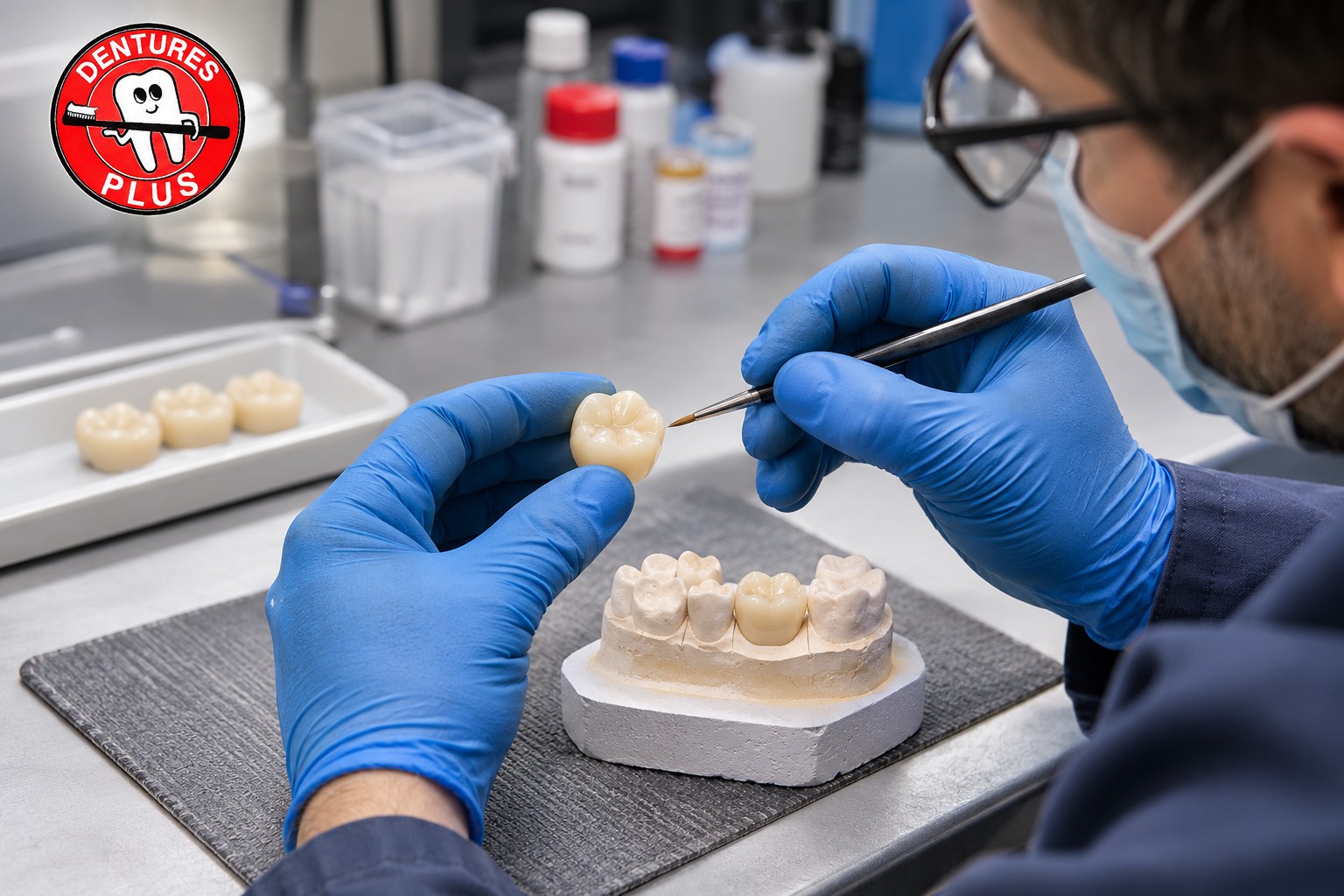
Posterior crowns play an important role in restorative dentistry. These restorations are used to restore premolars and molars, which experience significant chewing forces during everyday function.
Fabricating a posterior crown requires careful attention to several factors, including marginal fit, occlusal contacts, anatomical contours, material selection, and the dentist's clinical requirements.
Even small design or fabrication differences can affect how a crown fits and functions after placement. This makes communication between dentists and dental laboratory technicians an important part of the restorative process.
Understanding common challenges in posterior crown fabrication can help dental professionals improve case submissions and coordinate more effectively with their laboratory partners.
What Are Posterior Dental Crowns?
Posterior dental crowns are restorations designed to cover and restore premolars and molars.
These teeth are primarily responsible for grinding and crushing food. Therefore, posterior crowns must be designed to meet the functional and anatomical requirements of the individual case.
Depending on the clinical situation, posterior crowns may be fabricated using materials such as:
- Zirconia
- Lithium disilicate
- Metal-ceramic materials
- Other suitable restorative materials
The dentist determines the appropriate restoration based on the patient's clinical condition, treatment plan, and functional requirements.
1. Achieving Accurate Marginal Fit
Marginal fit is one of the most important considerations in posterior crown fabrication.
The crown margin should correspond closely to the prepared tooth's finishing line. Inaccurate margins may create clinical concerns and require additional adjustments.
Common challenges:
- Unclear preparation margins
- Inaccurate impressions or digital scans
- Incomplete preparation information
- Difficult margin visibility
- Design inaccuracies
How dental labs address these challenges:
Laboratory technicians review the available impressions, scans, and preparation details before beginning crown fabrication.
They evaluate the margin information during the design process and inspect the completed restoration on the working model or through suitable digital verification methods.
Clear preparation details and accurate case submissions from dentists help support better marginal adaptation.
2. Managing Occlusal Contacts
Posterior teeth experience substantial chewing forces. As a result, occlusal design is an important part of posterior crown fabrication.
A crown with excessive occlusal contact may create discomfort or require adjustment after placement. Insufficient contact may also affect the intended occlusal relationship.
Common challenges:
- Inaccurate bite registration
- Missing opposing arch information
- Incorrect occlusal clearance
- Inadequate consideration of functional contacts
How dental labs address these challenges:
Laboratories review the available bite registration, opposing arch records, and dentist's instructions.
Digital articulation tools or physical articulators may be used depending on the workflow and case requirements.
The dentist performs the final clinical occlusal evaluation and makes any necessary adjustments during placement.
3. Reproducing Natural Posterior Tooth Anatomy
Posterior teeth have complex anatomical features, including cusps, grooves, ridges, and occlusal surfaces.
Reproducing these structures accurately is important for creating a functional and anatomically appropriate restoration.
Common challenges:
- Incorrect cusp height
- Poor groove definition
- Overly bulky contours
- Inadequate occlusal morphology
- Differences between the restoration and adjacent teeth
How dental labs address these challenges:
Technicians consider the anatomy of adjacent and opposing teeth when designing the restoration.
Digital design software and conventional laboratory techniques can help reproduce appropriate anatomical contours.
The dentist's photographs, scans, and specific instructions can provide additional guidance when the case requires detailed anatomical customization.
4. Selecting the Right Crown Material
Material selection is another important consideration in posterior crown fabrication.
Different materials have different mechanical, aesthetic, and processing characteristics. The choice depends on the clinical requirements and dentist's prescription.
Zirconia
Zirconia is widely used for posterior crowns because of its strength and availability in different restorative formulations.
Its suitability depends on the specific product, restoration design, and manufacturer's instructions.
Lithium Disilicate
Lithium disilicate offers useful aesthetic properties and may be considered for selected posterior restorations based on the clinical situation and material indications.
Metal-Ceramic Restorations
Metal-ceramic restorations combine a metal substructure with an aesthetic ceramic layer. They remain an option in certain restorative situations.
How dental labs address material selection:
Laboratory technicians review the dentist's material prescription and the requirements of the restoration.
Factors such as available space, opposing dentition, functional demands, aesthetic expectations, and manufacturer recommendations should be considered.
The final material choice should be determined in coordination with the treating dentist.
5. Maintaining Proper Interproximal Contacts
Interproximal contacts describe the contact relationship between adjacent teeth.
For a posterior crown, appropriate contact is important for maintaining the intended relationship with neighboring teeth.
Common challenges:
- Contacts that are too tight
- Open contacts
- Incorrect proximal contours
- Inadequate information about adjacent teeth
How dental labs address these challenges:
Technicians review adjacent tooth anatomy and available model or scan information during crown design.
Contact areas are evaluated during the fabrication and finishing process.
The dentist verifies the final contact relationship clinically and makes any required adjustments.
6. Managing Limited Occlusal Space
Some posterior cases have limited restorative space because of tooth position, preparation design, opposing dentition, or other clinical factors.
Insufficient space may influence material selection and crown design.
Common challenges:
- Limited vertical clearance
- Inadequate preparation reduction
- Insufficient restorative thickness
- Functional space limitations
How dental labs address these challenges:
The laboratory reviews the available preparation and clearance information before proceeding with fabrication.
If the provided space appears insufficient for the prescribed material or design, the laboratory should communicate with the dentist for clarification.
Early communication can help avoid unnecessary redesign or remakes.
7. Achieving a Consistent Surface Finish
The final surface finish is another important part of posterior crown fabrication.
A properly finished restoration should follow the finishing and polishing requirements of the selected material.
Common challenges:
- Surface irregularities
- Inconsistent polishing
- Inadequate finishing around margins
- Improper finishing procedures for the selected material
How dental labs address these challenges:
Laboratory technicians follow the appropriate finishing and polishing protocols for the selected restorative material.
The restoration is inspected for visible surface defects and finishing concerns before dispatch.
Material-specific instructions should always guide the final finishing process.
8. Why Accurate Case Submission Matters
Even a skilled dental laboratory depends on accurate clinical information to fabricate a restoration according to the dentist's expectations.
Incomplete or unclear case submissions can create delays and increase the need for additional communication.
Dentists should consider providing:
- Accurate impressions or digital scans.
- Clear tooth preparation details.
- Opposing arch information.
- Bite registration where applicable.
- Required restoration type.
- Material preferences and specifications.
- Shade information where relevant.
- Photographs or additional design instructions when necessary.
Complete case information helps laboratory technicians understand the clinical requirements before beginning fabrication.
How Digital Dentistry Supports Posterior Crown Fabrication
Digital dentistry has introduced additional options for posterior crown design and manufacturing.
Depending on the laboratory's available systems, digital workflows may involve:
- Digital impression review
- CAD-based crown design
- Virtual articulation
- Digital margin identification
- CAM milling
- Digital case documentation
These technologies can support more controlled design and manufacturing processes.
However, digital workflows still depend on accurate scans, appropriate design decisions, material knowledge, and professional quality checks.
What Dentists Should Look for in a Crown and Bridge Laboratory
Choosing a dental laboratory involves more than evaluating the final appearance of a restoration.
Dentists should also consider the laboratory's communication process, case documentation, technical understanding, and approach to quality inspection.
Important questions include:
- Does the laboratory review preparation and margin information?
- How are occlusal requirements communicated?
- Can the laboratory work with the required restorative materials?
- How are unclear case specifications handled?
- Are restorations inspected before dispatch?
- Can the laboratory discuss technical concerns with the dentist?
A strong working relationship can help both teams manage restoration requirements more effectively.
How Dentures Plus Supports Dental Professionals
Dentists need a dental laboratory partner that understands the importance of accurate case information, restoration specifications, and clear communication.
Dentures Plus, based in San Jose, CA, provides dental laboratory services for dental professionals.
For crown and bridge cases, sharing complete preparation details, material preferences, shade information, and occlusal requirements helps the laboratory understand the intended restoration.
Clear communication between dentists and laboratory technicians supports an organized workflow and helps address case-specific requirements.
Dental professionals can contact Dentures Plus to discuss their crown and bridge laboratory needs and other restoration requirements.
Final Thoughts
Posterior crown fabrication involves several technical considerations, including marginal fit, occlusal contacts, natural anatomy, interproximal relationships, and material selection.
Each restoration has individual clinical requirements, making accurate case information and communication between dentists and dental laboratories essential.
By reviewing case details carefully and following appropriate fabrication and inspection procedures, dental laboratory teams can support dentists throughout the restorative workflow.
Looking for a dental laboratory partner in San Jose, CA? Contact Dentures Plus to discuss your crown and bridge restoration requirements.