The Importance of Material Selection in Modern Dental Restorations


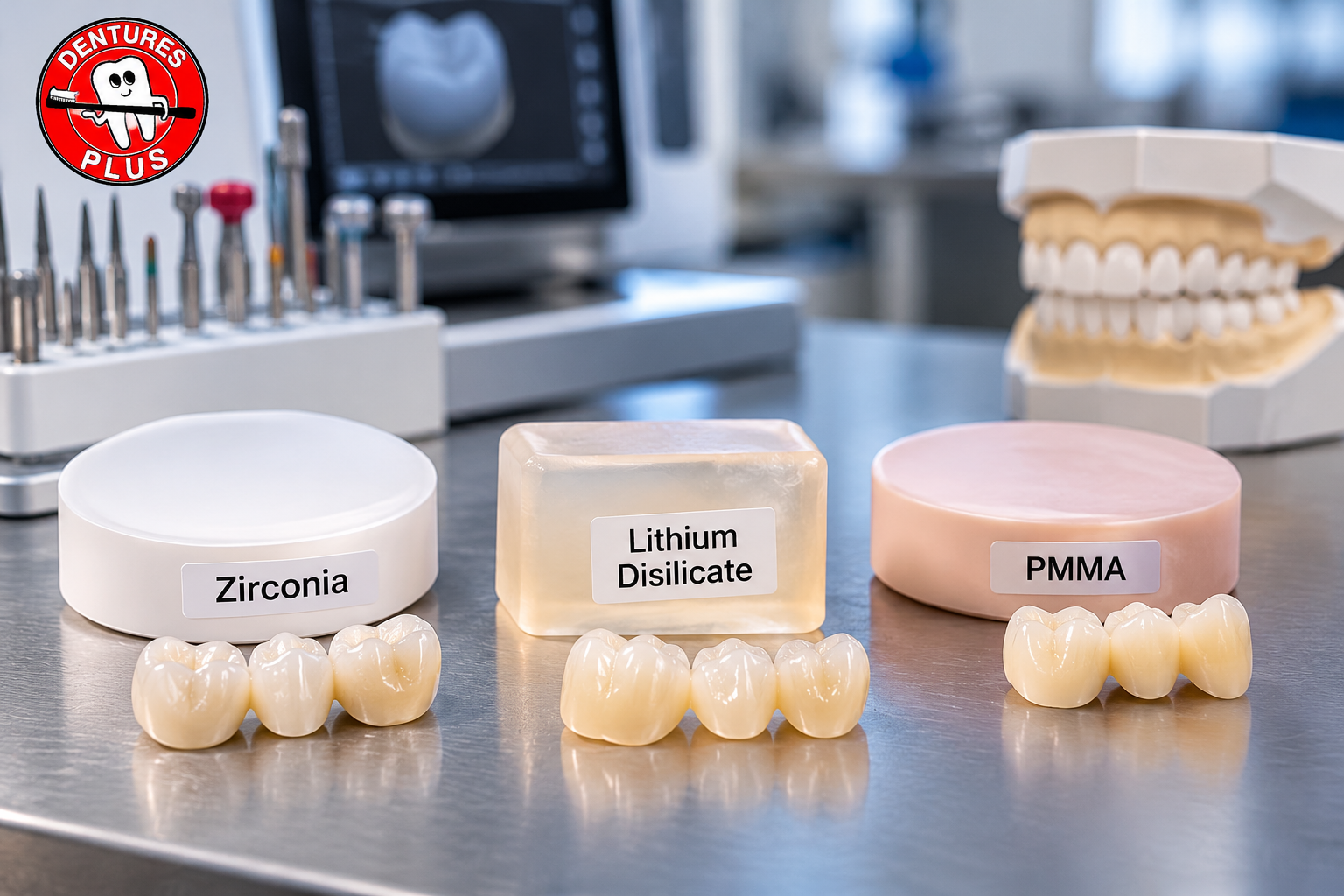
Modern restorative dentistry offers several materials for fabricating crowns, bridges, implant restorations, and other dental prosthetic components. Each material has different physical, mechanical, and aesthetic characteristics, making material selection an important consideration in the restorative process.
For dentists and dental laboratories, choosing an appropriate material involves understanding the restoration's purpose, clinical requirements, location in the mouth, functional demands, and desired appearance.
A material that works well for one restoration may not necessarily be the best choice for another. This is why communication between dentists and dental technicians plays an important role in the fabrication process.
In this guide, we explore commonly used dental restoration materials, their characteristics, and the factors dental professionals should consider when selecting materials for different restorative cases.
1. Why Is Material Selection Important in Dental Restorations?
Material selection influences several aspects of a dental restoration, including its strength, appearance, processing requirements, and suitability for the intended application.
Some important considerations include:
- Mechanical Strength: The material should be appropriate for the functional demands of the restoration.
- Aesthetic Appearance: Colour, translucency, and surface characteristics can influence how naturally a restoration blends with surrounding teeth.
- Biocompatibility: Materials should be appropriate for their intended use and meet relevant safety and regulatory requirements.
- Restoration Design: Different materials have different design and thickness requirements.
- Processing Requirements: Milling, sintering, crystallization, layering, polishing, and other procedures vary depending on the material.
- Clinical Requirements: The dentist's treatment plan and the patient's individual circumstances influence material selection.
Considering these factors helps dentists and laboratories evaluate which material may be appropriate for a particular case.
2. Common Materials Used in Dental Laboratories
Dental laboratories work with different materials depending on the restoration type and fabrication technique.
Here are some commonly used materials in modern restorative dentistry.
Zirconia
Zirconia is a ceramic material widely used in dental laboratories for crowns and bridges.
Its mechanical properties make it suitable for selected restorative applications where strength is an important consideration.
Important characteristics include:
- High mechanical strength, depending on the zirconia formulation.
- Availability in different translucency levels.
- Compatibility with CAD/CAM milling workflows.
- Use in selected single-unit and multi-unit restorations.
- Material-specific sintering and finishing requirements.
Different zirconia formulations offer different combinations of strength and translucency. Therefore, the appropriate option depends on the restoration design and clinical requirements.
Lithium Disilicate
Lithium disilicate is a glass-ceramic material known for its optical characteristics and aesthetic applications.
It is commonly considered for selected crowns, veneers, and other restorations where appearance is an important factor.
Its characteristics include:
- Natural-looking optical properties.
- Good translucency options.
- Suitability for selected aesthetic restorations.
- Compatibility with specific CAD/CAM and laboratory processing systems.
The final material choice should consider restoration location, functional requirements, preparation design, and manufacturer recommendations.
PMMA (Polymethyl Methacrylate)
PMMA is a polymer material used in several dental laboratory applications, including temporary and provisional restorations.
Depending on the product and intended indication, PMMA may be available in forms suitable for CAD/CAM milling.
Its characteristics include:
- Availability in different shades.
- Use in temporary restorative applications.
- Compatibility with selected digital manufacturing workflows.
- Relatively straightforward finishing and polishing procedures.
PMMA should be selected according to its intended application and should not automatically be considered interchangeable with definitive restorative materials.
Dental Composite Materials
Dental composites contain a resin matrix combined with reinforcing filler particles.
Certain composite materials are designed for laboratory fabrication and CAD/CAM milling.
They may be considered for selected restorative applications based on their mechanical and aesthetic properties.
Material specifications and intended indications should always guide their use.
Metal and Metal-Ceramic Materials
Metal alloys have historically played an important role in dental laboratory fabrication.
Metal-ceramic restorations combine a metal substructure with a ceramic outer layer.
Depending on the alloy and restoration design, these materials may be used in selected crowns and bridges.
Their selection requires consideration of mechanical properties, aesthetic expectations, laboratory processing, and material compatibility.
3. Zirconia vs. Lithium Disilicate: What Should Dentists Consider?
Zirconia and lithium disilicate are two commonly discussed materials in modern restorative dentistry.
However, they have different characteristics and should not be treated as identical alternatives.
| Consideration | Zirconia | Lithium Disilicate |
|---|---|---|
| Material category | Polycrystalline ceramic | Glass-ceramic |
| Main characteristics | Strength and formulation-dependent translucency | Aesthetic optical properties |
| Common applications | Selected crowns and bridges | Selected crowns and veneers |
| Fabrication | CAD/CAM milling and sintering | Pressing or compatible CAD/CAM workflows |
| Aesthetic considerations | Varies by zirconia formulation | Often selected for translucency and appearance |
| Material requirements | Specific sintering and finishing procedures | Material-specific crystallization and finishing |
There is no single material that is ideal for every case.
Dentists should consider the clinical situation, restoration design, functional requirements, available space, aesthetic expectations, and manufacturer instructions before making a selection.
Dental technicians can contribute by explaining the laboratory requirements and material characteristics relevant to the prescribed restoration.
4. How Material Selection Varies by Restoration Type
Different restorations may require different material considerations.
Dental Crowns
Crown material selection may depend on tooth location, functional loading, available restorative space, aesthetic expectations, and preparation design.
Zirconia, lithium disilicate, and other materials may be considered for different clinical situations.
Dental Bridges
Bridge fabrication involves additional considerations because multiple units must function together.
The selected material should be appropriate for the span, connector design, functional demands, and manufacturer specifications.
Implant Restorations
Implant-supported restorations require attention to the implant system, restorative components, design, and intended loading conditions.
Material selection should be considered alongside the restoration's overall design and the clinical prescription.
Temporary Restorations
Temporary materials such as PMMA may be used in selected provisional applications.
The choice depends on the expected duration, restoration design, and clinical requirements.
5. Factors Dentists and Dental Technicians Should Evaluate
Effective material selection requires collaboration between the dental practice and laboratory.
Some important factors include:
Restoration Location: Anterior and posterior restorations may have different functional and aesthetic priorities.
Functional Requirements: Bite forces, occlusal contacts, and the restoration's intended use should be considered.
Available Space: Preparation geometry and restorative thickness requirements can influence material selection.
Aesthetic Expectations: Shade, translucency, and surrounding tooth characteristics may influence the choice.
Digital Compatibility: The selected material should be compatible with the laboratory's manufacturing equipment and processing workflow.
Manufacturer Instructions: Each material system has specific requirements for design, fabrication, finishing, and clinical use.
Considering these factors before fabrication can help establish clearer expectations for the dental laboratory.
6. Common Material Selection Mistakes to Avoid
Material selection can become challenging when important case details are overlooked.
Some common issues include:
- Choosing a material based only on appearance.
- Ignoring the functional requirements of the restoration.
- Not considering minimum material thickness requirements.
- Overlooking manufacturer-specific processing instructions.
- Providing incomplete information to the dental laboratory.
- Assuming every CAD/CAM material is suitable for every milling system.
- Not considering the restoration's intended application.
Dentists and dental technicians can reduce misunderstandings by discussing material requirements during case planning.
7. Why Dentist-Lab Communication Matters in Material Selection
The dentist understands the patient's clinical condition, treatment objectives, and functional requirements.
The dental technician understands the technical characteristics of available materials, fabrication methods, and laboratory processes.
When these two professionals communicate effectively, material-related decisions can be discussed with greater clarity.
Dentists can support this process by providing:
- A detailed laboratory prescription.
- Restoration type and tooth identification.
- Clinical preparation information.
- Required material specifications, where determined.
- Shade references and supporting photographs.
- Digital scans or appropriate impressions.
- Special aesthetic or functional instructions.
For complex cases, discussing material options with the laboratory before fabrication may help clarify design and processing requirements.
8. How Dentures Plus Supports Dental Professionals
At Dentures Plus, we understand that every restorative case has its own technical requirements.
Dental practices may need laboratory support for dentures, crowns and bridges, implant restorations, and other dental appliances.
Material considerations, case documentation, and communication are important parts of coordinating these restorative requirements.
We believe that understanding the dentist's expectations and maintaining clear communication throughout the laboratory process are essential to a productive working relationship.
Dentists and dental clinics interested in discussing their restoration requirements can connect with Dentures Plus.
Conclusion
Material selection is an important part of modern restorative dentistry. Zirconia, lithium disilicate, PMMA, composite materials, and metal-based systems each have different characteristics and intended applications.
Selecting an appropriate material requires consideration of mechanical properties, aesthetic expectations, restoration design, clinical requirements, and manufacturing specifications.
For dentists and dental laboratories, effective communication helps ensure that material-related requirements are clearly understood before fabrication begins.
Looking for dental laboratory support for your restorative cases? Connect with Dentures Plus to discuss your requirements and laboratory coordination needs.