Zirconia Crown Lab in California: Types, Materials, and Fabrication Process


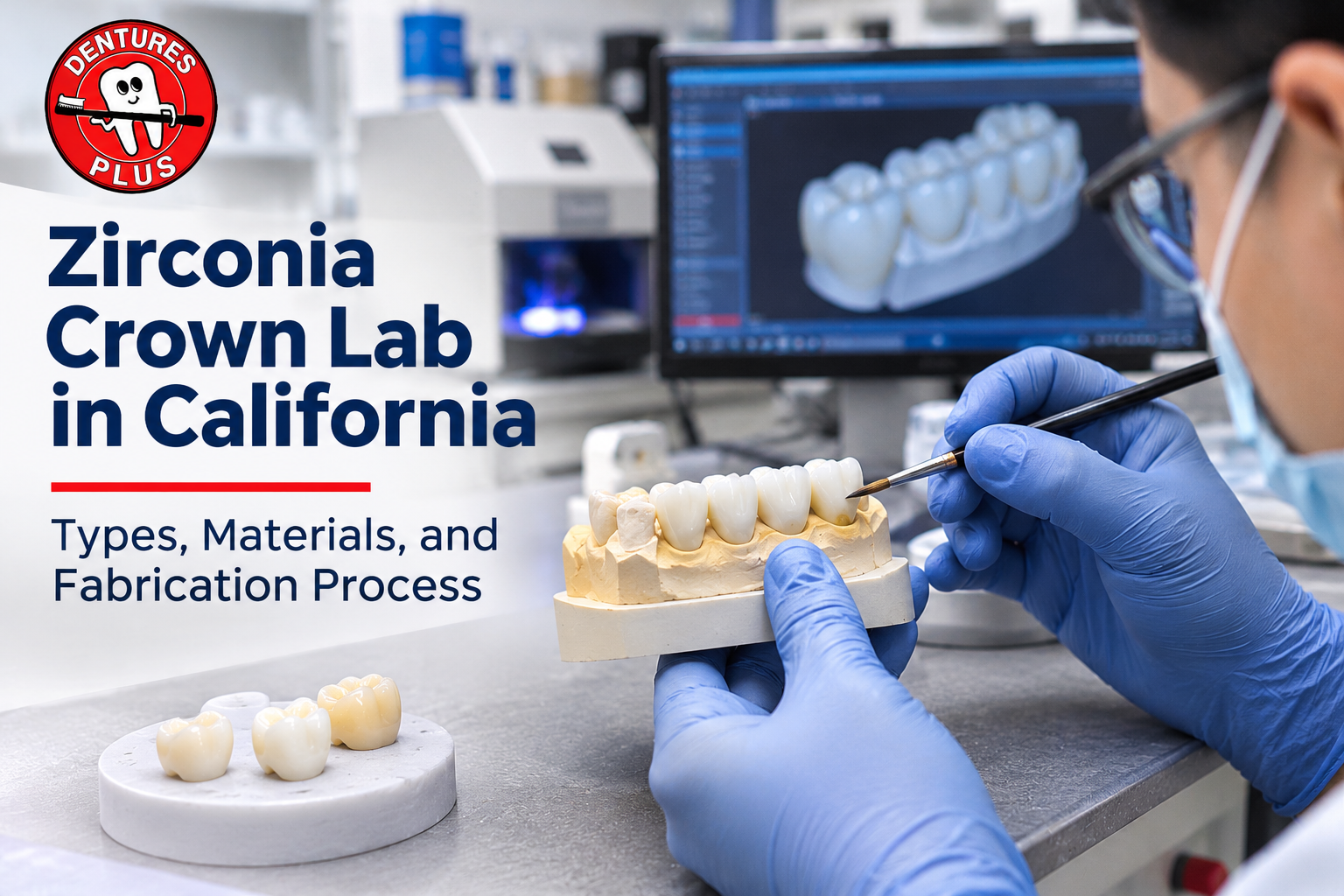
Zirconia crowns are widely used in restorative dentistry because of their strength, material versatility, and availability in different aesthetic formulations. They are used in various restorative applications, depending on the patient's clinical requirements and the dentist's treatment plan.
For dental practices in California, understanding zirconia materials and laboratory fabrication workflows can help improve communication with dental technicians and support appropriate restoration planning.
A dental zirconia laboratory works with dentists to process case records, design restorations, select suitable material options, and fabricate crowns according to the submitted prescription.
However, not all zirconia materials have identical properties. Differences in composition, translucency, strength, and processing requirements can influence material selection and the final restoration.
This guide explains the main types of zirconia crowns, their material characteristics, digital fabrication process, and important quality considerations for dentists.
What Are Zirconia Dental Crowns?
Zirconia dental crowns are tooth-shaped restorations fabricated using zirconium dioxide-based ceramic materials.
They are used to restore prepared teeth in situations where a full-coverage restoration is prescribed.
Zirconia is available in different formulations, allowing dental professionals to consider factors such as:
- Mechanical strength
- Translucency
- Aesthetic requirements
- Restoration thickness
- Tooth position
- Occlusal requirements
- Manufacturer specifications
The appropriate zirconia formulation should be selected according to the clinical situation, restoration design, and dentist's prescription.
Types of Zirconia Crowns Used in Dentistry
Different zirconia formulations are available for restorative applications. Understanding their characteristics helps dentists communicate material preferences to the laboratory.
1. Monolithic Zirconia Crowns
Monolithic zirconia crowns are fabricated from a single zirconia material without a separate veneering porcelain layer.
Their characteristics may include:
- High strength, depending on the formulation
- Reduced risk of porcelain veneer chipping compared with layered constructions
- Different available translucency options
- Digital CAD/CAM fabrication compatibility
Monolithic zirconia is used in selected posterior and other restorative applications based on clinical requirements.
2. Multilayer Zirconia Crowns
Multilayer zirconia materials are manufactured with variations in shade or translucency across different regions of the material blank.
These variations are designed to create a more gradual aesthetic appearance.
Potential characteristics include:
- Different translucency levels across layers
- Integrated shade gradients
- Reduced need for some external characterization
- Options for anterior and posterior restorations, depending on material specifications
The laboratory should select and orient the material according to the restoration design and manufacturer's instructions.
3. High-Strength Zirconia
Certain zirconia formulations are designed with mechanical strength as an important property.
They may be considered for restorations where strength requirements are a major factor.
However, translucency and strength can vary between zirconia formulations. Dentists should review the manufacturer's specifications rather than assuming all zirconia products have the same properties.
4. High-Translucency Zirconia
High-translucency zirconia formulations are designed to provide improved optical characteristics compared with more opaque formulations.
They may be considered for selected aesthetic restorations.
Material selection should account for:
- Restoration location
- Required thickness
- Underlying tooth shade
- Available restorative space
- Clinical loading conditions
- Manufacturer recommendations
High translucency does not automatically mean a material is suitable for every case.
Monolithic vs Multilayer Zirconia: Key Differences
Both monolithic and multilayer zirconia can be used in restorative dentistry, but their material construction and aesthetic characteristics differ.
| Feature | Monolithic Zirconia | Multilayer Zirconia |
|---|---|---|
| Construction | Single material structure | Material with graduated layers |
| Aesthetic appearance | Depends on formulation and characterization | Integrated shade and translucency gradients |
| Fabrication | CAD/CAM milling | CAD/CAM milling |
| Characterization | External staining may be used | May require additional characterization |
| Selection | Based on clinical requirements | Based on clinical and aesthetic requirements |
Feature Monolithic Zirconia Multilayer Zirconia
Construction Single material structure Material with graduated layers
Aesthetic appearance Depends on formulation and characterization Integrated shade and translucency gradients
Fabrication CAD/CAM milling CAD/CAM milling
Characterization External staining may be used May require additional characterization
Selection Based on clinical requirements Based on clinical and aesthetic requirements ---------------------- --------------------------------------------- ----------------------------------------------
The dentist and laboratory should consider the restoration's location, material specifications, and desired aesthetic outcome before choosing a formulation.
Materials and Properties of Dental Zirconia
Zirconia used in dentistry is available in different formulations, including materials stabilized with varying amounts of yttria.
The composition can influence important properties such as strength, translucency, and phase stability.
1. 3Y-TZP Zirconia
3Y-TZP refers to zirconia stabilized with approximately 3 mol% yttria.
It is traditionally associated with high mechanical strength and is used in selected restorative applications.
Its optical characteristics may differ from more highly translucent zirconia formulations.
2. 4Y Zirconia
4Y zirconia contains approximately 4 mol% yttria.
It offers a different balance of mechanical and optical properties compared with conventional 3Y formulations.
Its suitability depends on the manufacturer's specifications and the intended restoration.
3. 5Y Zirconia
5Y zirconia contains approximately 5 mol% yttria.
It is generally associated with higher translucency compared with conventional 3Y zirconia, although mechanical properties can differ.
It may be considered for selected aesthetic applications according to the manufacturer's indications.
Important: These categories are general material classifications. Actual performance varies by product, composition, processing, and manufacturer instructions.
CAD/CAM Zirconia Crown Fabrication Process
Modern zirconia crown fabrication commonly uses a digital CAD/CAM workflow.
This process involves multiple stages, from reviewing clinical records to final laboratory inspection.
Step 1: Case Submission and Review
The dental practice submits the required clinical information.
This may include:
- Digital intraoral scans or conventional impressions
- Opposing arch records
- Bite registration
- Preparation details
- Tooth number
- Selected material
- Shade information
- Special design instructions
The laboratory reviews the records before beginning the design process.
Step 2: Digital Model Preparation
For digital cases, the submitted scan files are reviewed using compatible dental software.
The technician checks the available preparation data, adjacent teeth, opposing arch, and bite relationship.
For conventional cases, suitable working models are prepared from the submitted impressions.
Step 3: CAD Crown Design
Computer-aided design software is used to prepare the crown geometry.
Design considerations may include:
- Crown contours
- Marginal adaptation
- Proximal contacts
- Occlusal anatomy
- Restoration thickness
- Material-specific design parameters
The design should follow the dentist's prescription and applicable material requirements.
Step 4: CAM Milling
After the digital design is prepared, the restoration can be milled from a suitable zirconia blank using compatible CAM equipment.
The milling process follows the material and equipment manufacturer's recommended settings.
Step 5: Sintering
Milled zirconia restorations generally require sintering according to the material manufacturer's instructions.
This controlled heating process develops the material's final properties and dimensions.
The laboratory must account for the material's prescribed processing parameters and shrinkage compensation.
Step 6: Staining and Glazing
Depending on the selected material and aesthetic requirements, the restoration may undergo additional characterization.
This can include:
- Surface staining
- Shade refinement
- Glazing
- Texture adjustments
- Aesthetic characterization
The required finishing approach depends on the zirconia formulation and restoration design.
Step 7: Final Inspection
Before dispatch, the laboratory reviews the completed restoration.
Inspection may include:
- Overall crown anatomy
- Marginal quality
- Proximal contacts
- Occlusal design
- Surface finish
- Shade and characterization
- Visible defects
- Case identification
The dentist performs the final clinical evaluation and any necessary adjustments before delivery to the patient.
Important Quality Considerations for Zirconia Crowns
A properly fabricated zirconia crown requires attention to both material processing and restoration design.
1. Accurate Marginal Adaptation
The restoration should be designed according to the submitted preparation records.
Accurate impressions or digital scans help the laboratory evaluate the preparation and design the crown.
2. Appropriate Restoration Thickness
Material thickness should follow the selected zirconia manufacturer's recommendations and the dentist's clinical requirements.
Insufficient thickness or unsuitable design parameters may affect restoration performance.
3. Proximal and Occlusal Contacts
Contact design is an important part of crown fabrication.
The laboratory should follow the dentist's instructions and available clinical records. Final contact and occlusal evaluation must be completed clinically.
4. Surface Finishing
Proper finishing is important for the final surface characteristics of a zirconia restoration.
The laboratory should use appropriate finishing and polishing procedures for the selected material.
5. Sintering Accuracy
Zirconia requires material-specific sintering procedures.
Incorrect processing parameters can affect the final restoration's characteristics.
Laboratories should follow the manufacturer's recommended cycle and equipment instructions.
6. Shade and Aesthetic Characterization
For aesthetic cases, the laboratory should review shade references and supporting photographs provided by the dentist.
The selected zirconia formulation, restoration thickness, and characterization approach can influence the final appearance.
Common Challenges in Zirconia Crown Fabrication
Even with digital technology, zirconia crown fabrication requires careful case planning and processing.
1. Incomplete Digital Scans
Missing preparation details or incomplete bite records may affect the information available for crown design.
What helps: Review scan completeness before submitting the case.
2. Incorrect Material Selection
Different zirconia formulations have different mechanical and optical characteristics.
What helps: Clearly communicate the intended restoration and material preferences.
3. Inaccurate Shade Information
A shade code alone may not communicate all aesthetic requirements.
What helps: Include suitable shade references and clinical photographs where needed.
4. Incorrect Sintering Parameters
Different zirconia materials may require different processing cycles.
What helps: Follow the manufacturer's instructions for the selected material.
5. Inadequate Surface Finishing
Insufficient finishing or polishing may affect the restoration's surface quality.
What helps: Follow the recommended finishing and polishing protocol.
6. Unclear Laboratory Prescriptions
Missing tooth numbers, material details, or special instructions can create confusion.
What helps: Use complete laboratory prescriptions and clarify complex cases before fabrication.
What Dentists Should Provide When Submitting Zirconia Crown Cases
Complete clinical information helps the laboratory understand the dentist's requirements.
Before submitting a zirconia crown case, dental practices should consider providing:
Clinical Records
- Accurate preparation impression or digital scan
- Opposing arch scan or impression
- Bite registration, where required
- Clear preparation margins
- Relevant clinical photographs
Prescription Details
- Correct tooth number
- Zirconia material preference
- Shade selection
- Required translucency
- Restoration design instructions
- Special characterization requirements
- Requested completion date
Additional Information
- Preparation shade, where relevant
- Available restorative space
- Specific contact or occlusal instructions
- Any special clinical considerations
Clear documentation can help reduce unnecessary communication and support a more organized workflow.
How to Choose a Zirconia Crown Lab in California
Dental practices evaluating a zirconia crown laboratory should consider more than its general crown fabrication services.
Important factors include:
Material Knowledge: The laboratory should understand the differences between available zirconia formulations and their specifications.
Digital Capabilities: Ask about the CAD/CAM systems and compatible digital workflows used for restoration fabrication.
Fabrication Procedures: Understand how the laboratory manages milling, sintering, finishing, and characterization.
Quality Inspection: Discuss the checks performed before completed restorations are dispatched.
Communication: Evaluate how the laboratory handles material questions, shade instructions, and case-related concerns.
Turnaround Expectations: Confirm realistic completion dates based on the specific restoration and laboratory schedule.
Choosing a laboratory with clear communication and suitable technical capabilities can support more organized restorative workflows.
How Dentures Plus Supports Dental Professionals
Dentures Plus is a dental laboratory based in San Jose, California, serving dental professionals with dental laboratory and restoration services.
Its service areas include crowns and bridges, dentures, implant restorations, dental veneers, and dental appliances.
Accurate case records, clear material instructions, and effective communication are important when coordinating restorative cases.
Dental professionals can contact Dentures Plus to discuss their crown and bridge requirements and confirm the available material and fabrication options.
Website: https://denturesplus.co/
Frequently Asked Questions
What is a zirconia dental crown?
A zirconia crown is a full-coverage dental restoration fabricated using zirconium dioxide-based ceramic material. It is prescribed for selected restorative situations according to clinical requirements.
What are the different types of zirconia crowns?
Common categories include monolithic zirconia, multilayer zirconia, high-strength formulations, and high-translucency formulations. Their properties vary by manufacturer and material composition.
What is the difference between 3Y, 4Y, and 5Y zirconia?
These classifications refer to approximate yttria content in the zirconia formulation. They are associated with different balances of mechanical and optical properties. Specific product specifications should always be reviewed.
Are monolithic zirconia crowns different from multilayer zirconia crowns?
Yes. Monolithic crowns use a single material structure, while multilayer zirconia blanks contain graduated layers designed to provide variations in shade or translucency.
How are zirconia crowns fabricated?
A typical workflow includes case review, digital model preparation, CAD design, CAM milling, sintering, finishing, characterization, and final inspection.
Do zirconia crowns require polishing?
Appropriate finishing and polishing are important parts of zirconia restoration processing. The procedure should follow the material manufacturer's recommendations.
What information should dentists provide to a zirconia crown laboratory?
Dentists should provide accurate impressions or scans, opposing arch records, bite information where required, tooth number, shade selection, material preference, and special design instructions.
How can dentists choose a zirconia crown laboratory in California?
Dentists should evaluate material knowledge, digital capabilities, fabrication procedures, quality inspection, communication, and realistic turnaround expectations.
Final Thoughts
Zirconia crowns are an important option in modern restorative dentistry, with different material formulations available for different clinical and aesthetic requirements.
From monolithic and multilayer zirconia to digital CAD/CAM design, milling, and sintering, each stage of laboratory fabrication requires attention to material specifications and restoration design.
For dental practices in California, working with a laboratory that understands zirconia materials and follows organized fabrication procedures can support better coordination throughout the restorative workflow.
Clear prescriptions, accurate clinical records, and communication between dentists and technicians remain essential for successful case management.
Looking for a dental laboratory partner in California?
Contact Dentures Plus in San Jose to discuss your crown and bridge laboratory requirements and available restoration options.
Website: https://denturesplus.co/