Night Guard Dental Lab in San Jose, CA: A Guide for Dentists


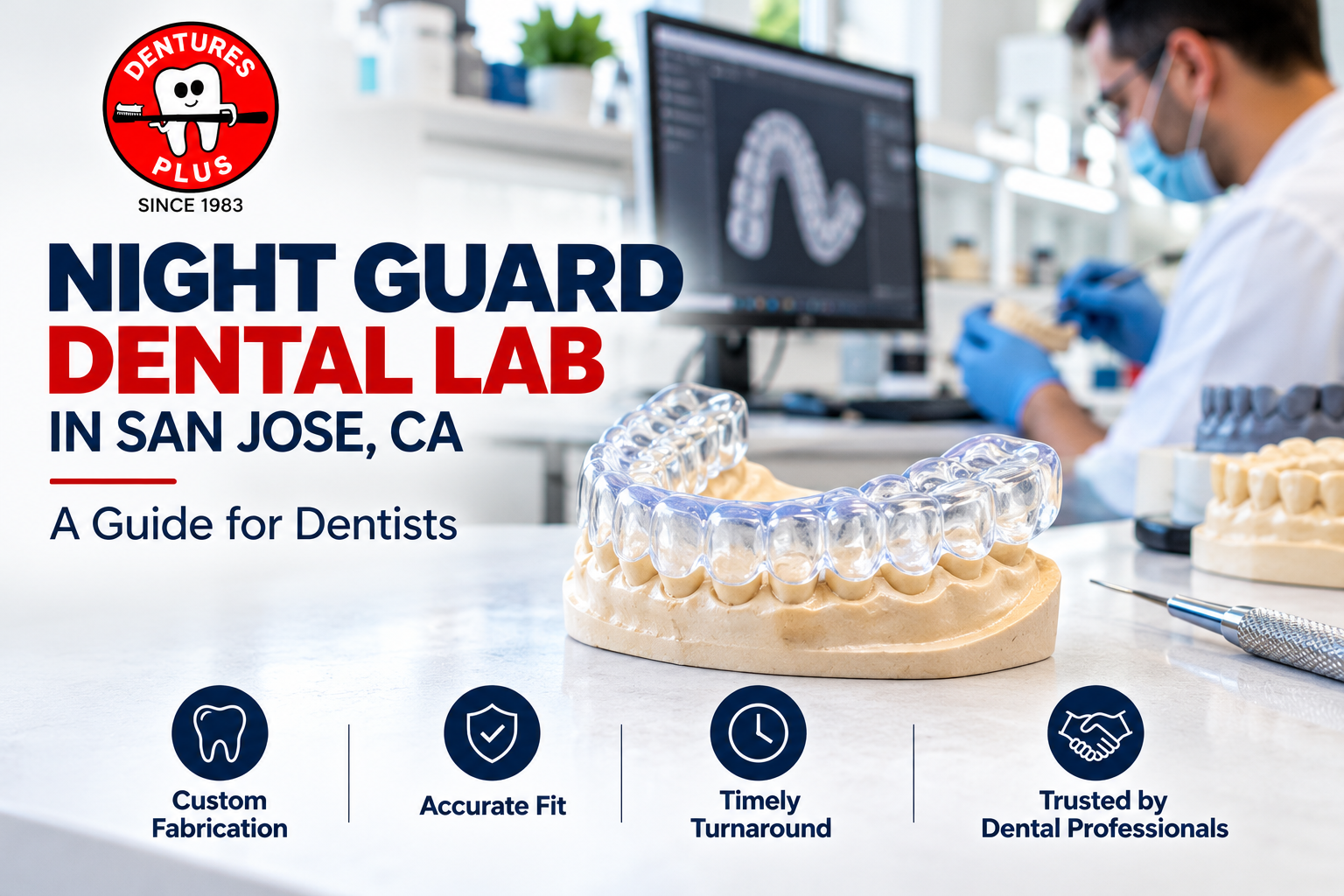
Night guards are commonly prescribed by dentists to help protect teeth from the effects of grinding and clenching. Choosing the right dental laboratory is an important part of the process because accurate case information, appropriate appliance specifications, and clear communication can help support consistent results.
For dental practices in San Jose, CA, working with a reliable night guard dental lab can help streamline case submissions and support an organized restorative and preventive workflow.
What Is a Dental Night Guard?
A dental night guard is a removable oral appliance designed to help protect teeth from the effects of bruxism, or teeth grinding and clenching. Dentists may recommend different types of night guards depending on the patient's clinical needs and treatment plan.
The appliance design, material, thickness, and other specifications should be determined according to the dentist's prescription and the requirements of the individual case.
How Does a Night Guard Dental Lab Support Dentists?
A dental laboratory works with the prescribing dentist to fabricate appliances based on the information supplied with each case. A well-organized laboratory workflow may include:
- Reviewing the prescription and case instructions.
- Assessing the submitted impressions or digital scan files.
- Confirming the required appliance type and design specifications.
- Communicating with the dental practice if essential information is missing or unclear.
- Fabricating the appliance according to the agreed specifications.
- Preparing the completed case for return to the dental practice.
Clear instructions and communication are important throughout the process. The dentist remains responsible for diagnosis, treatment planning, appliance selection, and clinical evaluation.
What Information Should Dentists Include When Submitting a Night Guard Case?
Complete case information can help reduce avoidable questions and support an efficient laboratory workflow. Before submitting a case, dental practices should consider including:
1. A clear prescription
Specify the requested appliance and any relevant clinical instructions. Include the intended arch and the design requirements applicable to the case.
2. Accurate impressions or digital scans
Submit suitable impressions or scan files according to the laboratory's accepted submission requirements. Check that the records are complete and that relevant areas are captured clearly.
3. Appliance specifications
Communicate the requested material, thickness, coverage, and other design preferences where applicable and clinically appropriate.
4. Bite registration and supporting records
Provide bite registration or additional records when required for the specific case. Follow the laboratory's guidance regarding the records needed.
5. Contact and case details
Include the practice's contact information, patient or case reference, and any relevant instructions for handling questions about the submission.
Before sending a case, confirm that all required records are included and that the prescription matches the intended appliance.
Digital Scans vs. Traditional Impressions for Night Guards
Dental practices may submit night guard cases using traditional impressions or digital scans, depending on their equipment, the case requirements, and the laboratory's accepted workflow.
Digital scans
Digital workflows can allow practices to submit scan files electronically when the laboratory accepts the relevant file format. Before submission, confirm that the scan is complete, the correct arch is identified, and the required bite records or supporting files are included.
Traditional impressions
Traditional impressions remain an option for practices that use conventional impression techniques. The practice should follow appropriate impression and shipping procedures and check that the records are suitable for the intended appliance.
Neither method is automatically best for every case. Dentists should select the workflow that meets their clinical requirements and confirm the laboratory's submission guidelines before sending records.
Questions to Ask When Choosing a Night Guard Dental Lab in San Jose, CA
When evaluating a dental laboratory partner, dentists may want to ask:
- Which night guard types and materials does the laboratory offer?
- What impression methods and digital scan formats are accepted?
- What records and prescription details are required for each case?
- How does the laboratory communicate when information is missing?
- What are the laboratory's current turnaround times and shipping procedures?
- How are case questions, adjustments, or remake requests handled?
- Which other dental appliances can be coordinated through the same laboratory?
The answers can help a practice determine whether the laboratory's capabilities and workflow are a good match for its needs.
How Better Case Communication Can Help Reduce Delays
Incomplete prescriptions, missing records, and unclear design instructions can lead to additional communication before fabrication can proceed. Dental practices can help avoid unnecessary back-and-forth by using a consistent case submission checklist.
A practical checklist should cover the prescription, appliance specifications, impressions or scan files, bite records where required, and the practice's contact information. Practices should also confirm any laboratory-specific requirements before submitting unfamiliar case types.
If a case requires clarification, timely communication between the dental practice and laboratory can help both teams understand the next steps.
Working With Dentures Plus in San Jose, CA
Dentures Plus is a dental laboratory serving dental professionals in San Jose, California. Its laboratory services include dental appliances alongside dentures, crowns and bridges, implant restorations, and other restorative solutions.
Dental practices interested in night guards or related appliances should contact Dentures Plus to confirm current service availability, accepted case submission methods, appliance options, and turnaround expectations.
A clear understanding of laboratory capabilities and submission requirements can help dentists choose a partner that fits their clinical workflow.
Final Thoughts
Choosing a night guard dental lab involves more than comparing service options. Dentists should consider appliance capabilities, submission requirements, communication practices, and the laboratory's approach to handling case questions.
For dental practices in San Jose, CA, establishing a clear workflow with a dental laboratory can help support organized case management and effective collaboration.
Looking for a dental laboratory partner in San Jose, CA? Contact Dentures Plus to discuss your practice's dental appliance and laboratory service needs.